Sustainable Packaging Market Revenue, Trends, and Strategic Insights by 2035
Sustainable Packaging Market Size
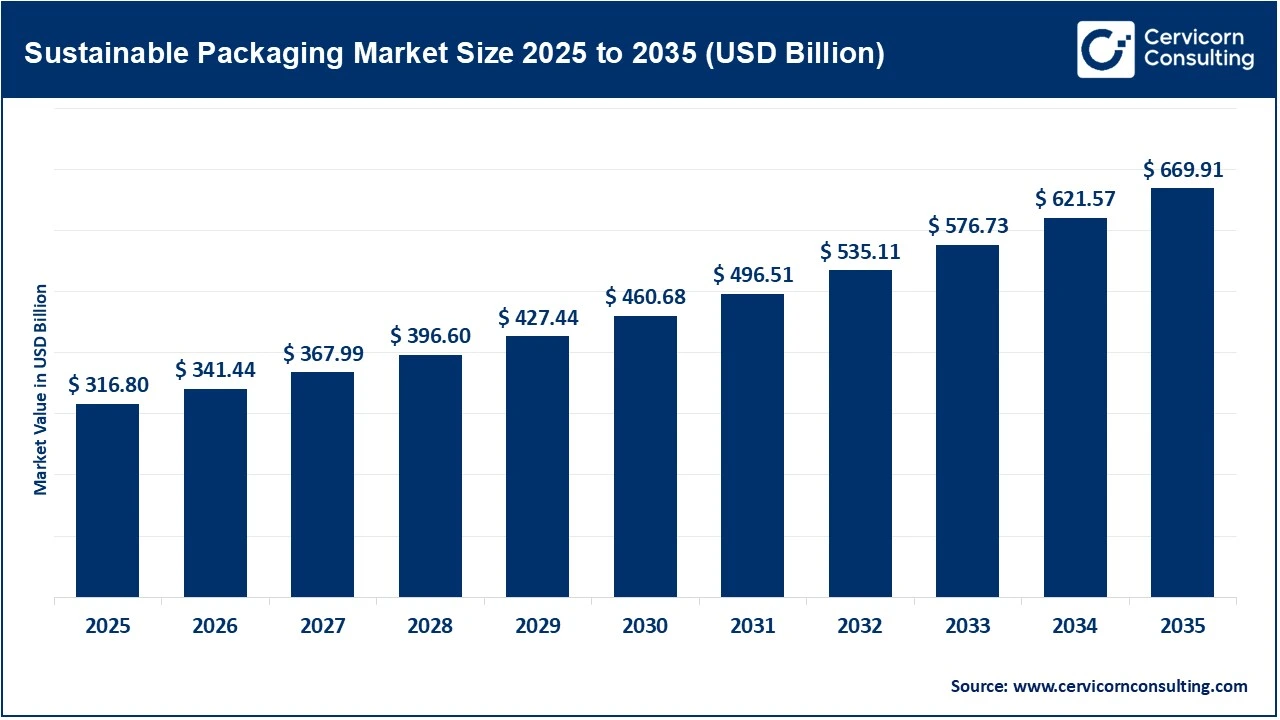
The global sustainable packaging market reached an estimated valuation of USD 316.80 billion in 2025 and is projected to grow substantially, attaining approximately USD 669.91 billion by 2035. This growth reflects a strong compound annual growth rate (CAGR) of around 7.8% throughout the forecast period.
What is the Sustainable Packaging Market?
The sustainable packaging market refers to the global industry focused on designing, manufacturing, and distributing packaging solutions that reduce environmental impact across the product lifecycle. These solutions prioritize recyclability, biodegradability, compostability, reuse potential, and reduced carbon emissions while maintaining product protection and logistical efficiency. Sustainable packaging includes materials such as recycled paperboard, compostable bioplastics, reusable containers, glass, metal, and lightweight polymers engineered for circular-economy compatibility.
Traditionally, packaging relied heavily on single-use plastics and petroleum-based materials. However, environmental concerns, regulatory pressure, and consumer demand have shifted industry priorities toward sustainable alternatives. Today, companies across food and beverage, pharmaceuticals, e-commerce, personal care, and electronics sectors are transitioning toward eco-friendly packaging systems that support waste reduction and climate goals.
The global sustainable packaging market size was valued at approximately USD 289 billion in 2024 and is projected to grow significantly through 2030 due to rising environmental awareness and regulatory initiatives encouraging recyclable and reusable packaging solutions.
Sustainable Packaging Market Growth Factors
The sustainable packaging market is expanding rapidly due to increasing consumer awareness about environmental protection, stricter global regulations limiting single-use plastics, corporate ESG commitments, rising adoption of circular-economy frameworks, expansion of e-commerce logistics requiring lightweight recyclable packaging, innovations in biodegradable materials and recyclable polymers, strong investments in packaging redesign by multinational brands, government incentives supporting compostable packaging adoption, and rapid growth in food delivery and pharmaceutical packaging industries requiring eco-safe solutions; additionally, growing pressure from investors for sustainability reporting and carbon footprint reduction is encouraging organizations to replace conventional packaging with recyclable, reusable, and bio-based alternatives, thereby accelerating demand across developed and emerging economies worldwide.
Get a Free Sample: https://www.cervicornconsulting.com/sample/2922
Why Sustainable Packaging is Important
Sustainable packaging is critical for environmental protection, regulatory compliance, and long-term business competitiveness. Packaging accounts for a significant portion of global waste streams, especially plastics that persist for centuries in landfills and oceans. Sustainable packaging addresses these challenges by reducing material consumption and supporting recycling ecosystems.
Its importance can be understood through several dimensions:
Environmental impact reduction
Eco-friendly packaging reduces greenhouse-gas emissions, lowers landfill waste, and supports biodiversity protection by minimizing pollution.
Circular economy enablement
Reusable and recyclable materials help keep resources within production loops longer, reducing dependence on virgin materials.
Regulatory compliance
Governments worldwide are introducing extended producer responsibility laws and plastic taxes that incentivize sustainable alternatives.
Consumer preference alignment
Modern consumers increasingly favor brands demonstrating environmental responsibility.
Supply-chain optimization
Lightweight packaging reduces logistics costs and transportation emissions.
Collectively, these advantages position sustainable packaging as a strategic investment rather than merely an environmental obligation.
Company Profiles in the Sustainable Packaging Market
Amcor plc
Specialization
Flexible packaging, rigid plastics, specialty cartons, recyclable packaging solutions.
Key Focus Areas
Amcor focuses on developing recyclable, reusable, and compostable packaging across food, beverage, healthcare, and personal-care sectors while advancing circular packaging innovation strategies.
Notable Features
Approximately 74% of Amcor’s packaging production met recyclability guidelines in FY2024, demonstrating strong progress toward circular packaging commitments.
2024 Revenue
Approximately USD 14–15 billion.
Market Share
Estimated mid-single-digit share in the global sustainable packaging landscape.
Global Presence
Operations across more than 40 countries with customers in over 100 markets worldwide.
Amcor’s commitment to achieving 100% recyclable or reusable packaging by 2025 positions it as a sustainability pioneer.
Sealed Air
Specialization
Protective packaging, food safety packaging, automated packaging systems.
Key Focus Areas
The company focuses on recyclable protective materials, automation-enabled packaging optimization, and waste-reduction packaging technologies.
Notable Features
Sealed Air integrates digital packaging automation with sustainability innovation, helping companies reduce packaging material usage while improving logistics efficiency.
2024 Revenue
Approximately USD 6.2 billion.
Market Share
Estimated around 18% share in certain protective packaging segments.
Global Presence
Operates in more than 100 countries supporting food processing and industrial packaging industries.
Sealed Air continues to lead innovations in protective recyclable packaging.
Sonoco Products Company
Specialization
Industrial packaging, paperboard packaging, rigid containers, protective packaging.
Key Focus Areas
Circular fiber-based packaging solutions and sustainable industrial packaging innovations.
Notable Features
Sonoco is expanding its recyclable fiber-based packaging portfolio across consumer goods and industrial sectors.
2024 Revenue
Approximately USD 5.1 billion.
Market Share
Estimated 15% share in selected sustainable protective packaging segments.
Global Presence
Operations across North America, Europe, Asia-Pacific, and Latin America.
Sonoco’s investments in fiber recycling technologies strengthen its sustainability positioning.
Smurfit Kappa
Specialization
Paper-based packaging and corrugated solutions.
Key Focus Areas
Renewable fiber packaging for e-commerce and retail logistics.
Notable Features
The company leads innovation in recyclable corrugated packaging optimized for online retail supply chains.
2024 Revenue
Approximately USD 2.55 billion (segment reference).
Market Share
Estimated 7–8% in selected sustainable corrugated packaging categories.
Global Presence
Operations across Europe and the Americas with expanding global footprint.
Smurfit Kappa remains a leader in renewable packaging innovation.
Berry Global Inc.
Specialization
Rigid plastic packaging, closures, containers, flexible packaging materials.
Key Focus Areas
Lightweight recyclable plastics and reusable packaging innovations.
Notable Features
Berry Global develops recyclable packaging systems supporting multiple consumer industries including healthcare and food packaging.
2024 Revenue
Approximately USD 13 billion.
Market Share
Significant contributor in rigid plastic sustainable packaging segments.
Global Presence
Operations across more than 140 countries through combined distribution ecosystems.
Berry Global continues expanding recyclable polymer innovation platforms.
Leading Trends in the Sustainable Packaging Market and Their Impact
1. Circular Economy Packaging Design
Companies increasingly design packaging for recyclability and reuse rather than disposal.
Impact:
Accelerates material recovery rates and reduces landfill waste globally.
2. Rise of Bioplastics and Compostable Materials
Bio-based packaging derived from corn starch, sugarcane, and algae is gaining momentum.
Impact:
Reduces fossil-fuel dependence and improves composting compatibility.
3. E-Commerce Packaging Optimization
The rapid expansion of online retail is increasing demand for lightweight recyclable shipping materials.
Impact:
Encourages corrugated fiberboard innovation and right-sizing packaging technologies.
4. Smart Packaging Integration
Digital labeling, QR-enabled traceability, and sensor-enabled packaging improve recycling transparency.
Impact:
Enhances supply-chain visibility and waste tracking.
5. Lightweighting Technologies
Manufacturers are reducing packaging thickness while maintaining durability.
Impact:
Reduces logistics emissions and material consumption.
Successful Examples of Sustainable Packaging Adoption Around the World
Europe: Paper-Based Retail Packaging Transformation
Major European retailers have replaced plastic trays with recyclable fiber alternatives, reducing packaging waste significantly.
United States: Recyclable Protective Packaging Systems
Food and logistics companies are adopting recyclable cushioning solutions replacing expanded polystyrene foam.
Japan: Compostable Packaging Innovation
Japanese packaging manufacturers are introducing biodegradable food containers compatible with municipal composting systems.
India: FMCG Refill Packaging Initiatives
Indian consumer-goods companies are adopting refill-based packaging formats to reduce plastic waste.
Latin America: Sugarcane-Based Bioplastics
Brazil leads adoption of sugarcane-derived polyethylene packaging materials.
Global Regional Analysis Including Government Initiatives and Policies Shaping the Market
North America
North America represents a mature sustainable packaging market supported by regulatory frameworks and strong corporate sustainability commitments.
Key initiatives include:
- Plastic reduction legislation
- Corporate ESG disclosures
- State-level recycling mandates
- Circular packaging innovation funding programs
The United States is witnessing rising adoption of recyclable mono-material packaging systems, while Canada supports zero-plastic-waste strategies encouraging biodegradable alternatives.
Europe
Europe leads the global sustainable packaging transition due to strict environmental regulations.
Major initiatives include:
- EU Circular Economy Action Plan
- Plastic Packaging Tax
- Extended Producer Responsibility frameworks
- Single-Use Plastics Directive
The United Kingdom imposes higher taxes on packaging containing less than 30% recycled material, encouraging recycled-content adoption. Ireland and Italy also provide tax incentives supporting compostable packaging adoption.
These policies accelerate sustainable packaging innovation across the region.
Asia-Pacific
Asia-Pacific represents the fastest-growing sustainable packaging market due to urbanization and e-commerce growth.
China promotes biodegradable packaging adoption across retail sectors. India encourages plastic-waste reduction through national sustainability missions and packaging regulations. Japan supports recyclable packaging innovation through industrial sustainability policies.
Regional market size is expected to exceed USD 111 billion by 2029.
Latin America
Latin America is emerging as a strong adopter of bio-based packaging materials.
Brazil leads development of sugarcane-based polymers supporting renewable packaging supply chains. Governments across the region are implementing plastic-waste reduction strategies within retail and food packaging sectors.
Middle East and Africa
MEA markets are gradually transitioning toward sustainable packaging through environmental policies and recycling infrastructure investments.
Countries such as the UAE and South Africa are promoting recyclable packaging adoption in retail and food-service industries. Public-private partnerships are supporting modernization of waste-management ecosystems across the region.
Additional Market Outlook Insights
Paper-based packaging remains the dominant sustainable material segment due to high recyclability rates and strong infrastructure support globally. Flexible recyclable plastics and compostable biopolymers are expected to witness the fastest growth over the next decade as manufacturers transition toward circular packaging strategies.
Governments worldwide continue encouraging green packaging adoption through tax incentives, recycling mandates, and sustainability certification frameworks, reinforcing long-term market expansion potential.
To Get Detailed Overview, Contact Us: https://www.cervicornconsulting.com/contact-us
Read Report: AI in Drug Development Market Revenue, Trends, and Strategic Insights by 2035