Small Molecule Injectable Drugs Market Revenue, Trends, and Strategic Insights by 2035
Small Molecule Injectable Drugs Market Size
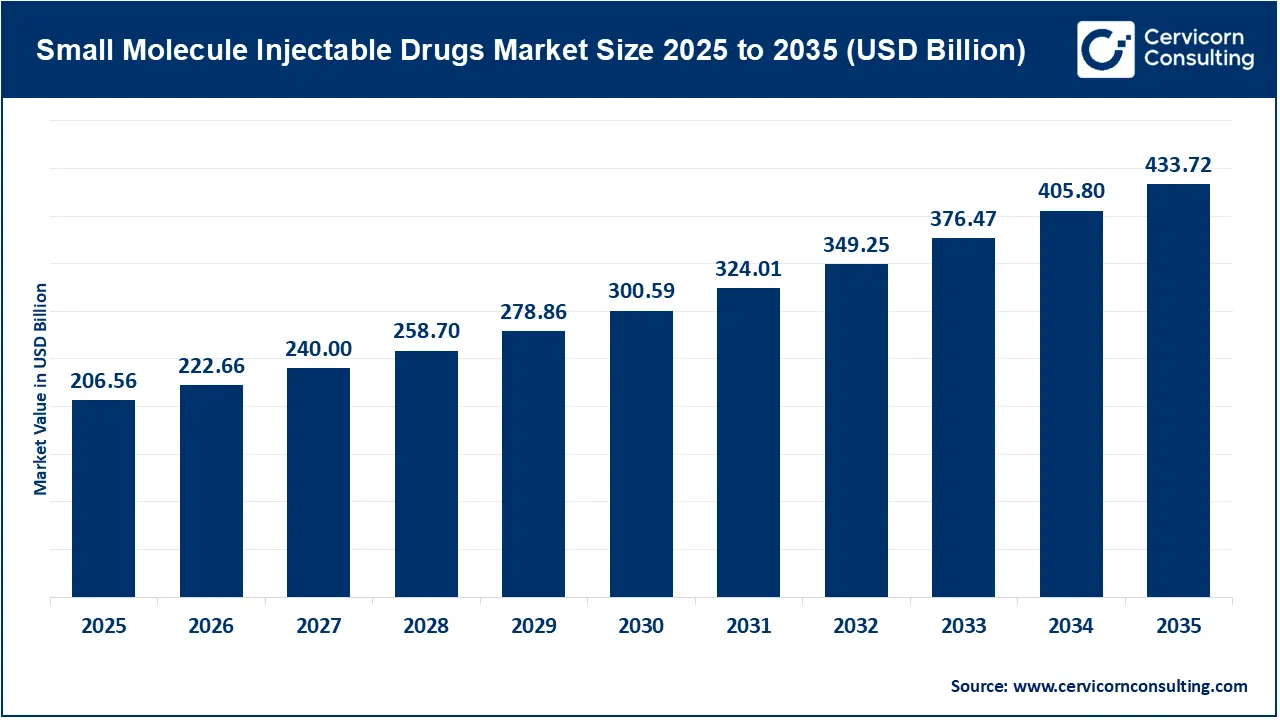
The global small molecule injectable drugs market was valued at approximately USD 206.56 billion in 2025 and is projected to reach USD 433.72 billion by 2035, expanding at a CAGR of 7.70% during the forecast period.
Small Molecule Injectable Drugs Market Growth Factors
The global small molecule injectable drugs market is experiencing steady growth due to the increasing prevalence of chronic diseases such as cancer, cardiovascular disorders, diabetes, infectious diseases, and autoimmune conditions that require rapid and highly effective therapeutic intervention. The growing elderly population, rising hospital admissions, expanding oncology treatment programs, increasing demand for generic injectable medicines, continuous advancements in sterile manufacturing technologies, improved drug delivery systems, higher healthcare expenditure, government support for pharmaceutical manufacturing, expanding biologics combination therapies, and increasing investments in research and development are collectively accelerating market expansion.
Additionally, regulatory approvals for novel injectable formulations, improved healthcare infrastructure in emerging economies, and the growing adoption of precision medicine continue to create lucrative opportunities for pharmaceutical manufacturers worldwide.
What is the Small Molecule Injectable Drugs Market?
The small molecule injectable drugs market refers to the global industry involved in the research, development, manufacturing, commercialization, and distribution of injectable medicines composed of chemically synthesized low-molecular-weight compounds. Unlike biologics, small molecule drugs are produced using traditional chemical synthesis methods and can easily penetrate cells to interact with intracellular targets.
These medicines are administered through intravenous (IV), intramuscular (IM), subcutaneous (SC), or intradermal injections to provide rapid therapeutic effects and improved bioavailability.
Small molecule injectable drugs are widely used for:
- Cancer treatment
- Pain management
- Anti-infective therapies
- Cardiovascular diseases
- Neurological disorders
- Hormonal therapies
- Critical care medicine
- Emergency medicine
- Anesthesia
- Intensive care units (ICUs)
Their rapid onset of action and precise dosing make them essential across hospitals, specialty clinics, ambulatory surgical centers, and emergency healthcare facilities.
Get a Free Sample: https://www.cervicornconsulting.com/sample/2705
Why is the Small Molecule Injectable Drugs Market Important?
Small molecule injectable drugs remain one of the most important pillars of modern healthcare.
Their importance stems from several advantages:
Rapid Drug Action
Injectable administration delivers medication directly into the bloodstream or tissues, ensuring faster therapeutic response than oral medicines.
High Bioavailability
Since injectable drugs bypass the digestive tract, nearly 100% of the active ingredient reaches systemic circulation.
Essential in Emergency Medicine
These drugs are indispensable in treating:
- Heart attacks
- Septic shock
- Stroke
- Trauma
- Severe infections
- Acute allergic reactions
Oncology Applications
Many chemotherapy agents remain small molecule injectables due to their effectiveness against rapidly dividing cancer cells.
Hospital-Based Treatment
Injectable formulations are critical across intensive care units, surgical procedures, inpatient care, and outpatient infusion centers.
Support for Precision Medicine
Advanced injectable therapies allow healthcare professionals to optimize dosing and treatment schedules based on individual patient needs.
Market Dynamics Driving Growth
Several structural factors continue to reshape the industry.
Rising Global Burden of Cancer
Cancer incidence continues to rise worldwide, increasing demand for injectable chemotherapy agents and supportive care medicines.
Increasing Hospitalization Rates
Growing admissions for chronic illnesses and surgical procedures directly increase injectable drug consumption.
Expanding Generic Injectable Industry
Patent expirations are encouraging manufacturers to develop cost-effective generic injectable alternatives.
Technological Advancements
Automation in sterile manufacturing, advanced aseptic filling technologies, and improved packaging are enhancing production efficiency.
Growth of Contract Manufacturing
Many pharmaceutical companies increasingly outsource injectable manufacturing to specialized CDMOs to reduce production costs and accelerate commercialization.
Emerging Markets
Healthcare expansion across Asia-Pacific, Latin America, and the Middle East is creating new opportunities for injectable drug manufacturers.
Leading Companies in the Small Molecule Injectable Drugs Market
| Company | Specialization | Key Focus Areas | Notable Features | 2025 Revenue* | Estimated Market Position | Global Presence |
|---|---|---|---|---|---|---|
| Pfizer Inc. | Innovative pharmaceuticals | Oncology, anti-infectives, cardiovascular, hospital injectables | Extensive sterile injectable portfolio and global manufacturing network | Approximately US$62.6 billion | Leading multinational pharmaceutical company | Operations in more than 125 countries |
| Merck & Co., Inc. | Prescription medicines and vaccines | Oncology, infectious diseases, hospital therapies | Strong injectable oncology pipeline led by immunotherapy | Approximately US$65.0 billion | Global pharmaceutical leader | Presence in over 140 countries |
| Teva Pharmaceutical Industries Ltd. | Generic pharmaceuticals | Generic injectables, biosimilars, specialty medicines | One of the world’s largest generic injectable manufacturers | Approximately US$17 billion (2025) | Leading generic pharmaceutical supplier | Presence in over 60 countries |
| Novartis AG | Innovative medicines | Oncology, cardiovascular, immunology | Advanced injectable oncology portfolio | Approximately US$56–57 billion (2025) | Global innovation-focused pharmaceutical company | More than 140 countries |
| AstraZeneca plc | Oncology and rare diseases | Cancer, respiratory, cardiovascular | Strong injectable oncology and specialty medicine pipeline | Approximately US$58–59 billion (2025) | Major global pharmaceutical company | Operations in over 100 countries |
*Company revenue represents total corporate revenue rather than revenue solely from small molecule injectable drugs.
Leading Trends Transforming the Market
Expansion of Oncology Injectables
Cancer therapies continue to dominate new injectable drug approvals. Pharmaceutical companies are investing heavily in targeted chemotherapy, immunotherapy combinations, and precision oncology medicines.
Impact
- Increased hospital demand
- Higher R&D investments
- Better patient survival rates
Growth of Generic Injectable Medicines
Healthcare providers increasingly prefer generic injectables due to affordability and comparable therapeutic performance.
Impact
- Lower treatment costs
- Improved patient access
- Greater competition among manufacturers
Advanced Drug Delivery Technologies
Manufacturers are introducing:
- Ready-to-use injectables
- Prefilled syringes
- Dual-chamber injection systems
- Long-acting injectable formulations
Impact
- Improved patient safety
- Reduced medication errors
- Faster administration
Increased Investment in Sterile Manufacturing
Companies are modernizing sterile production facilities with robotics, automation, and AI-driven quality monitoring.
Impact
- Higher production capacity
- Improved regulatory compliance
- Better product quality
Personalized Medicine
Precision medicine is encouraging customized injectable therapies based on genetic profiling and biomarkers.
Impact
- Improved treatment outcomes
- Reduced adverse effects
- Enhanced therapeutic effectiveness
Digital Manufacturing
Artificial intelligence and digital monitoring systems are improving production efficiency and predictive maintenance.
Impact
- Reduced manufacturing downtime
- Improved supply chain efficiency
- Better quality assurance
Successful Examples Around the World
Pfizer
Pfizer has developed one of the industry’s broadest injectable medicine portfolios covering oncology, infectious diseases, cardiovascular medicine, anesthesia, and hospital care.
Its worldwide manufacturing capabilities enable rapid global distribution during public health emergencies.
Merck & Co.
Merck has achieved remarkable success through injectable oncology medicines that have transformed cancer treatment standards worldwide.
Its continued investment in immunotherapy research supports long-term market leadership.
Teva Pharmaceutical Industries
Teva has become a global leader in affordable generic injectable medicines, improving patient access to essential therapies across developed and emerging markets.
Novartis
Novartis has strengthened its injectable oncology portfolio through continuous innovation in targeted cancer therapies and precision medicine.
AstraZeneca
AstraZeneca continues expanding its injectable oncology and rare disease therapies, significantly improving treatment outcomes for cancer patients worldwide.
Global Regional Analysis
North America
North America represents the largest regional market due to:
- Advanced healthcare infrastructure
- High pharmaceutical R&D expenditure
- Strong reimbursement systems
- Large oncology patient population
- Presence of leading pharmaceutical manufacturers
Government Initiatives
Government agencies continue supporting:
- Accelerated drug approvals
- Cancer Moonshot initiatives
- Precision medicine programs
- Investment in pharmaceutical manufacturing resilience
- Hospital preparedness and emergency medicine capacity
These policies encourage innovation while ensuring patient access to critical injectable therapies.
Europe
Europe maintains a significant share of the market because of:
- Universal healthcare coverage
- Strong regulatory standards
- Advanced hospital infrastructure
- High generic medicine adoption
Countries including Germany, France, Italy, the United Kingdom, and Switzerland remain major pharmaceutical manufacturing hubs.
Government Policies
European governments promote:
- Generic medicine utilization
- Pharmaceutical sustainability initiatives
- Cross-border healthcare collaboration
- Funding for oncology research
- Incentives for advanced manufacturing technologies
These measures improve access to affordable injectable medicines while supporting pharmaceutical innovation.
Asia-Pacific
Asia-Pacific is expected to witness the fastest growth during the forecast period.
Major growth drivers include:
- Large patient population
- Increasing healthcare expenditure
- Expanding pharmaceutical manufacturing
- Rising cancer incidence
- Medical tourism
- Government healthcare modernization
China, India, Japan, South Korea, and Singapore continue expanding sterile injectable manufacturing capabilities.
Government Initiatives
Regional governments are supporting the market through:
- Pharmaceutical production incentives
- Faster regulatory approvals
- Investments in domestic API manufacturing
- Expansion of hospital infrastructure
- National healthcare insurance programs
- Promotion of export-oriented pharmaceutical industries
These initiatives strengthen regional manufacturing while improving medicine accessibility.
Latin America
The Latin American market continues to expand steadily due to:
- Improving healthcare systems
- Rising chronic disease burden
- Increased government healthcare investments
- Growing generic medicine consumption
Brazil and Mexico remain the largest pharmaceutical markets within the region.
Government Policies
Governments are encouraging:
- Affordable medicine programs
- Domestic pharmaceutical production
- Hospital modernization
- Public procurement reforms
- Expanded healthcare insurance coverage
These policies support wider adoption of injectable therapies.
Middle East & Africa
Although relatively smaller, the Middle East & Africa market offers significant long-term opportunities.
Growth is supported by:
- Expanding hospital infrastructure
- Rising government healthcare budgets
- Increasing prevalence of chronic diseases
- Growing private healthcare investments
Countries such as Saudi Arabia, the UAE, and South Africa are investing heavily in pharmaceutical manufacturing and healthcare modernization.
Government Initiatives
Regional governments are implementing:
- National healthcare transformation strategies
- Local pharmaceutical manufacturing incentives
- Public-private healthcare partnerships
- Improved regulatory frameworks
- Investments in oncology treatment centers
These efforts are expected to strengthen long-term demand for small molecule injectable drugs.
Future Opportunities
Several emerging opportunities are expected to shape the competitive landscape over the coming years:
- Expansion of injectable therapies for rare diseases
- Increasing development of long-acting injectable formulations
- Wider adoption of ready-to-administer injectable products
- Growth in contract development and manufacturing organizations (CDMOs)
- Integration of artificial intelligence into pharmaceutical manufacturing
- Expansion of injectable oncology pipelines
- Greater investment in sterile manufacturing technologies
- Rising demand for affordable generic injectables in emerging economies
- Sustainable manufacturing practices and environmentally friendly packaging
- Continued collaboration between pharmaceutical companies, governments, and research institutions to accelerate innovation and improve patient access to advanced injectable therapies.
To Get Detailed Overview, Contact Us: https://www.cervicornconsulting.com/contact-us
Read Report: Small Molecule CDMO Market Revenue, Trends, and Strategic Insights by 2035