Autoimmune Disease Treatment Market Revenue, Trends, and Strategic Insights by 2035
Autoimmune Disease Treatment Market
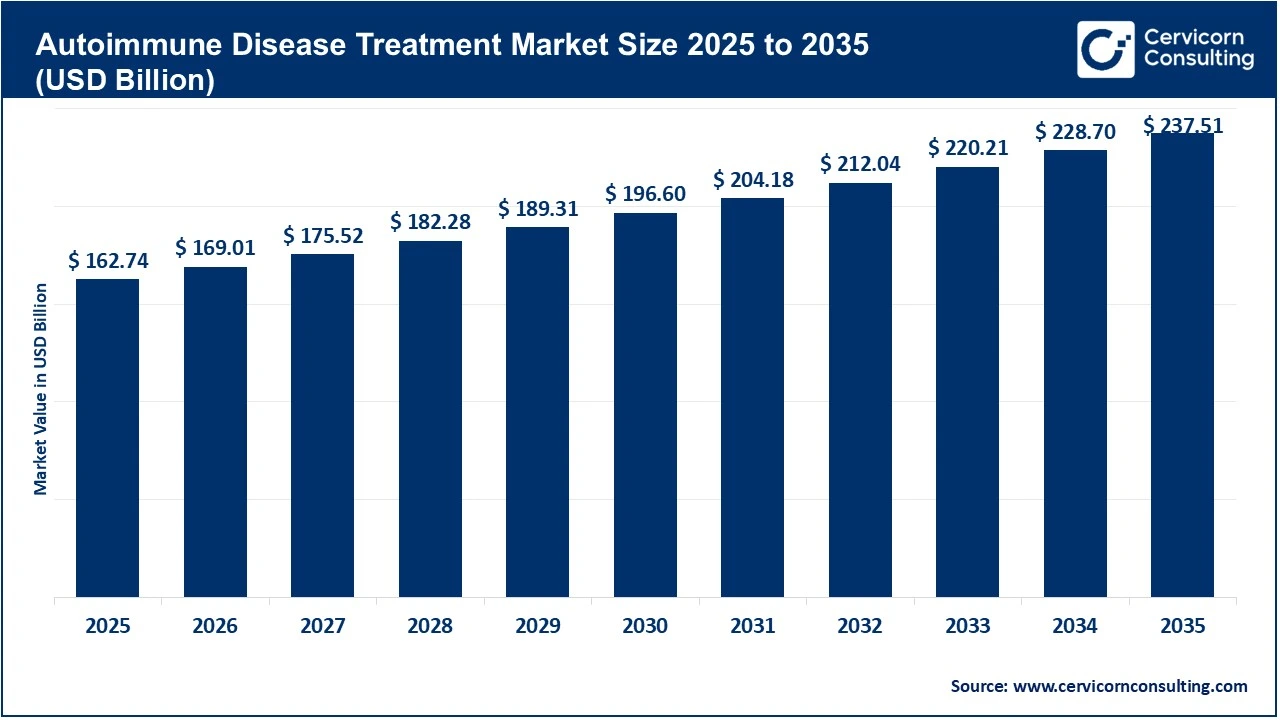
The global autoimmune disease treatment market was valued at approximately USD 162.74 billion in 2025 and is expected to reach nearly USD 237.51 billion by 2035, expanding at a CAGR of 3.9% during the forecast period. The market is driven by growing adoption of biologic drugs, increasing research into immunomodulatory therapies, and strong demand for targeted treatments with fewer side effects.
What is the Autoimmune Disease Treatment Market?
The autoimmune disease treatment market refers to the global industry focused on the development, manufacturing, and commercialization of therapies designed to manage autoimmune disorders. These treatments aim to suppress abnormal immune responses, reduce inflammation, prevent tissue damage, and improve quality of life for patients.
The market includes a wide range of treatment categories such as:
- Biologics
- Corticosteroids
- Disease-modifying anti-rheumatic drugs (DMARDs)
- Nonsteroidal anti-inflammatory drugs (NSAIDs)
- Immunosuppressants
- Targeted small molecule therapies
- Biosimilars
- Gene and cell therapies
Biologics currently dominate the market because of their high efficacy in treating severe autoimmune disorders. Drugs targeting TNF-alpha, IL-17, IL-23, and JAK pathways have transformed autoimmune disease management over the last decade.
The autoimmune disease treatment market serves hospitals, specialty clinics, retail pharmacies, and online healthcare platforms across developed and emerging economies.
Why is the Autoimmune Disease Treatment Market Important?
The autoimmune disease treatment market plays a crucial role in global healthcare because autoimmune disorders affect millions of people worldwide and often require lifelong treatment. Rising disease prevalence, sedentary lifestyles, environmental triggers, genetic susceptibility, and aging populations have significantly increased the burden of autoimmune diseases.
Effective treatments help reduce hospitalizations, disability, chronic pain, and long-term complications associated with autoimmune disorders. Advanced biologics and precision medicines have improved survival rates and enabled patients to lead healthier lives with fewer symptoms.
The market is also important economically because autoimmune diseases create a significant financial burden on healthcare systems. Early diagnosis and targeted treatments can reduce emergency care costs, surgical procedures, and productivity losses.
Additionally, the autoimmune disease treatment market drives pharmaceutical innovation through:
- Development of personalized medicine
- Expansion of biologics manufacturing
- Growth of biosimilar products
- Advancements in immunotherapy
- Increased investment in AI-driven drug discovery
- Clinical trials for novel immune pathway inhibitors
Healthcare providers and governments are prioritizing autoimmune disease management to improve patient outcomes and reduce long-term healthcare expenditure.
Autoimmune Disease Treatment Market Growth Factors
The autoimmune disease treatment market is expanding rapidly due to several interconnected growth drivers including the increasing prevalence of autoimmune disorders worldwide, rising awareness regarding early diagnosis and treatment, growing adoption of biologics and biosimilars, expanding elderly population, increasing healthcare expenditure, rapid advancements in precision medicine, favorable reimbursement policies in developed economies, and continuous investments in research and development by major pharmaceutical companies. Technological advancements in genomics, biomarker discovery, and targeted immunotherapy are enabling more effective and personalized treatment approaches. Additionally, the surge in clinical trials focused on novel immune-modulating therapies, increasing demand for minimally invasive therapies, rising access to healthcare services in emerging economies, and strategic collaborations between biotechnology firms and pharmaceutical companies are further accelerating market growth. Government support for rare disease treatment programs, expanding telemedicine adoption, and increased patient awareness campaigns are also contributing significantly to the long-term development of the autoimmune disease treatment market.
Leading Companies in the Autoimmune Disease Treatment Market
| Company | Specialization | Key Focus Areas | Notable Features | 2024 Revenue |
|---|---|---|---|---|
| AbbVie Inc. | Immunology and biologics | Rheumatoid arthritis, psoriasis, Crohn’s disease | Strong portfolio with Humira, Skyrizi, and Rinvoq | USD 56.3 billion |
| Amgen Inc. | Biotechnology and inflammatory disease therapies | Autoimmune inflammation and biosimilars | Advanced biologic therapies and biosimilar leadership | Approx. USD 33 billion |
| Johnson & Johnson | Pharmaceutical and immune therapies | Psoriasis, ulcerative colitis, rheumatoid arthritis | Strong immunology portfolio led by Stelara | USD 88.82 billion |
| F. Hoffmann-La Roche AG | Precision medicine and biologics | Multiple sclerosis and inflammatory disorders | Advanced diagnostics and targeted biologics | Approx. USD 69 billion |
| Pfizer Inc. | Immunology and targeted therapies | Rheumatoid arthritis and inflammatory disorders | Strong global distribution and R&D pipeline | Approx. USD 63 billion |
AbbVie Inc.
AbbVie remains one of the dominant companies in the autoimmune disease treatment market due to the success of blockbuster immunology drugs such as Humira, Skyrizi, and Rinvoq. The company has aggressively expanded its immunology portfolio through acquisitions, strategic collaborations, and next-generation biologics development. Although Humira faces biosimilar competition, AbbVie’s newer products are driving sustained growth.
AbbVie’s immunology division has maintained strong global leadership through targeted therapies that treat psoriasis, Crohn’s disease, ulcerative colitis, and rheumatoid arthritis. The company continues to invest heavily in IL-23 and JAK inhibitor technologies.
Amgen Inc.
Amgen is a major biotechnology company specializing in inflammatory and autoimmune disease therapies. The company is recognized for its expertise in biologics and biosimilars. Amgen’s autoimmune treatment portfolio includes Enbrel and several biosimilar products designed to improve affordability and accessibility.
Amgen is increasingly focusing on digital healthcare integration, advanced biologics manufacturing, and next-generation immunotherapies. The company’s strong research pipeline supports continued expansion in autoimmune disease treatment.
Johnson & Johnson
Johnson & Johnson has a strong presence in the autoimmune disease treatment market through its Janssen pharmaceutical division. The company’s flagship drug Stelara has achieved major success in treating psoriasis, Crohn’s disease, and ulcerative colitis.
The company continues to invest in innovative biologics, precision medicine, and global clinical trials. Johnson & Johnson benefits from its diversified healthcare operations and broad international distribution network.
F. Hoffmann-La Roche AG
Roche is known for its leadership in precision medicine, diagnostics, and targeted biologic therapies. The company has developed advanced treatments for multiple sclerosis and inflammatory disorders.
Roche combines pharmaceutical innovation with advanced diagnostic capabilities, enabling more personalized treatment strategies. Its investments in biomarker-driven therapies and AI-assisted drug discovery are strengthening its position in the autoimmune disease treatment market.
Pfizer Inc.
Pfizer plays a significant role in autoimmune disease treatment through therapies targeting inflammatory pathways and immune system regulation. The company’s immunology portfolio includes treatments for rheumatoid arthritis and chronic inflammatory diseases.
Pfizer’s global manufacturing capacity, strong research infrastructure, and expanding pipeline of targeted therapies support its competitive position in the market.
Market Share and Global Presence of Key Players
| Company | Estimated Autoimmune Market Share | Global Presence |
|---|---|---|
| AbbVie Inc. | Approximately 15%–18% | North America, Europe, Asia-Pacific, Latin America |
| Johnson & Johnson | Approximately 10%–12% | Strong presence in over 60 countries |
| Roche | Approximately 7%–9% | Extensive operations across Europe and Asia |
| Pfizer Inc. | Approximately 6%–8% | Global pharmaceutical operations in more than 125 countries |
| Amgen Inc. | Approximately 5%–7% | North America, Europe, Asia-Pacific |
AbbVie and Johnson & Johnson collectively account for a substantial share of the global autoimmune disease treatment market due to their strong biologics portfolios and global commercialization capabilities.
Leading Trends and Their Impact on the Autoimmune Disease Treatment Market
Growing Adoption of Biologics
Biologic drugs continue to dominate the autoimmune disease treatment market due to their superior effectiveness in controlling severe autoimmune conditions. Biologics specifically target immune pathways responsible for chronic inflammation, offering better outcomes than traditional therapies.
This trend is driving increased investment in monoclonal antibodies, cytokine inhibitors, and personalized therapies.
Expansion of Biosimilars
The expiration of patents for blockbuster biologics such as Humira has accelerated biosimilar adoption. Biosimilars provide cost-effective alternatives while maintaining comparable efficacy.
This trend is improving treatment accessibility in emerging economies and reducing healthcare expenditure globally.
Precision Medicine and Personalized Therapies
Precision medicine is transforming autoimmune disease treatment by enabling therapies tailored to individual patient profiles. Biomarker-based diagnostics and genomic testing are helping physicians select the most effective treatments.
Personalized medicine improves therapeutic outcomes and reduces adverse side effects.
Artificial Intelligence in Drug Discovery
AI-powered drug discovery platforms are accelerating autoimmune therapy development by analyzing massive biological datasets and identifying promising drug targets.
Pharmaceutical companies are increasingly using AI to optimize clinical trials, improve drug efficacy prediction, and reduce development timelines.
Increasing Focus on Oral Therapies
While injectable biologics dominate the market, oral therapies such as JAK inhibitors are gaining popularity because of improved patient convenience and compliance.
Oral autoimmune treatments are expected to expand rapidly over the next decade.
Telemedicine and Digital Healthcare Integration
Digital healthcare technologies are improving autoimmune disease management through remote monitoring, virtual consultations, and wearable health devices.
Telemedicine adoption has improved treatment accessibility, especially for patients in rural and underserved regions.
What are Some Successful Examples of the Autoimmune Disease Treatment Market Around the World?
Humira by AbbVie
Humira became one of the most successful autoimmune therapies globally, generating billions in annual revenue for AbbVie. The drug revolutionized treatment for rheumatoid arthritis, psoriasis, Crohn’s disease, and ulcerative colitis.
Its success demonstrated the commercial and clinical potential of biologic therapies in autoimmune disease management.
Stelara by Johnson & Johnson
Stelara achieved strong global adoption for treating psoriasis and inflammatory bowel disease. The therapy targets IL-12 and IL-23 pathways, significantly improving patient outcomes.
The success of Stelara strengthened Johnson & Johnson’s position in the immunology market.
Ocrevus by Roche
Roche’s Ocrevus transformed multiple sclerosis treatment by offering effective disease progression control with convenient dosing schedules.
The therapy has become one of the leading treatments for multiple sclerosis globally.
Enbrel by Amgen
Enbrel played a major role in advancing TNF inhibitor therapies for autoimmune diseases such as rheumatoid arthritis and psoriasis.
The drug demonstrated the effectiveness of biologic immunotherapies in long-term disease management.
Xeljanz by Pfizer
Pfizer’s Xeljanz became one of the first widely adopted oral JAK inhibitors for rheumatoid arthritis and inflammatory disorders.
The drug accelerated interest in targeted small molecule therapies for autoimmune disease treatment.
Global Regional Analysis of the Autoimmune Disease Treatment Market
North America
North America dominates the autoimmune disease treatment market due to high disease prevalence, advanced healthcare infrastructure, strong reimbursement systems, and extensive pharmaceutical research activities.
The United States accounts for the largest market share because of:
- High biologics adoption
- Large patient population
- Presence of major pharmaceutical companies
- Strong FDA regulatory framework
- Significant R&D investments
Government support for biologic innovation and insurance coverage expansion has strengthened market growth.
Government Initiatives and Policies in North America
- Increased NIH funding for autoimmune disease research
- FDA fast-track approvals for innovative biologics
- Medicare reimbursement support for specialty drugs
- Expansion of rare disease treatment programs
- Investment in biosimilar accessibility initiatives
Europe
Europe represents a major market for autoimmune disease treatment due to strong healthcare systems, increasing awareness, and favorable government reimbursement policies.
Countries such as Germany, France, and the United Kingdom are leading contributors to regional growth.
The European market is benefiting from:
- Rising biologics adoption
- Strong biosimilar penetration
- Government healthcare funding
- Growing clinical research activities
- Increasing demand for personalized medicine
Government Initiatives and Policies in Europe
- European Medicines Agency support for biosimilar approvals
- EU healthcare funding programs for chronic disease treatment
- Expansion of precision medicine initiatives
- Public healthcare reimbursement for autoimmune therapies
- Cross-border collaborative research programs
Asia-Pacific
Asia-Pacific is expected to witness the fastest growth in the autoimmune disease treatment market due to improving healthcare infrastructure, rising healthcare expenditure, expanding patient awareness, and increasing pharmaceutical investments.
China, India, Japan, and South Korea are major growth contributors.
The region is experiencing rapid growth because of:
- Increasing diagnosis rates
- Large patient population
- Rising biologics manufacturing
- Government healthcare reforms
- Expanding clinical trials
Government Initiatives and Policies in Asia-Pacific
- China’s healthcare modernization programs
- India’s expansion of affordable biologic manufacturing
- Japan’s support for regenerative medicine research
- Increased government insurance coverage for chronic diseases
- Public-private partnerships supporting biotech innovation
Latin America
Latin America is gradually emerging as an important market due to increasing healthcare access and rising autoimmune disease awareness.
Brazil and Mexico are key regional markets.
The market is benefiting from:
- Improving healthcare infrastructure
- Rising pharmaceutical investments
- Growing access to biosimilars
- Government healthcare modernization initiatives
Government Initiatives and Policies in Latin America
- Public healthcare expansion programs
- Increased biologics reimbursement support
- Investments in pharmaceutical manufacturing
- Partnerships with multinational pharmaceutical companies
Middle East and Africa
The Middle East and Africa region is experiencing moderate growth due to increasing healthcare investments and rising awareness regarding autoimmune disorders.
Countries such as Saudi Arabia, the UAE, and South Africa are investing heavily in healthcare modernization.
The region is witnessing growth through:
- Expansion of specialty healthcare centers
- Rising adoption of biologics
- Increasing government healthcare budgets
- Growth in medical tourism
Government Initiatives and Policies in the Middle East and Africa
- National healthcare transformation programs
- Investment in biotechnology infrastructure
- Expansion of chronic disease treatment access
- Public-private healthcare partnerships
Future Outlook of the Autoimmune Disease Treatment Market
The future of the autoimmune disease treatment market appears highly promising due to continued innovation in biologics, biosimilars, precision medicine, and gene-based therapies. Pharmaceutical companies are expected to focus heavily on targeted immune modulation, AI-driven drug development, and personalized treatment approaches.
Emerging therapies including cell therapy, microbiome-based treatments, and regenerative medicine are anticipated to create new opportunities across the global market. Rising healthcare investments in emerging economies and expanding patient access to advanced therapies will further support long-term market expansion.
The increasing shift toward value-based healthcare, digital patient monitoring, and integrated care solutions is also expected to transform the way autoimmune diseases are diagnosed and managed worldwide.
To Get Detailed Overview, Contact Us: https://www.cervicornconsulting.com/contact-us
Read Report: Infrastructure as a Service (IaaS) Market Revenue, Trends, and Strategic Insights by 2035