AI in Oncology Market
Healthcare

AI in Oncology Market Revenue, Trends, and Strategic Insights by 2035
AI in Oncology Market Size

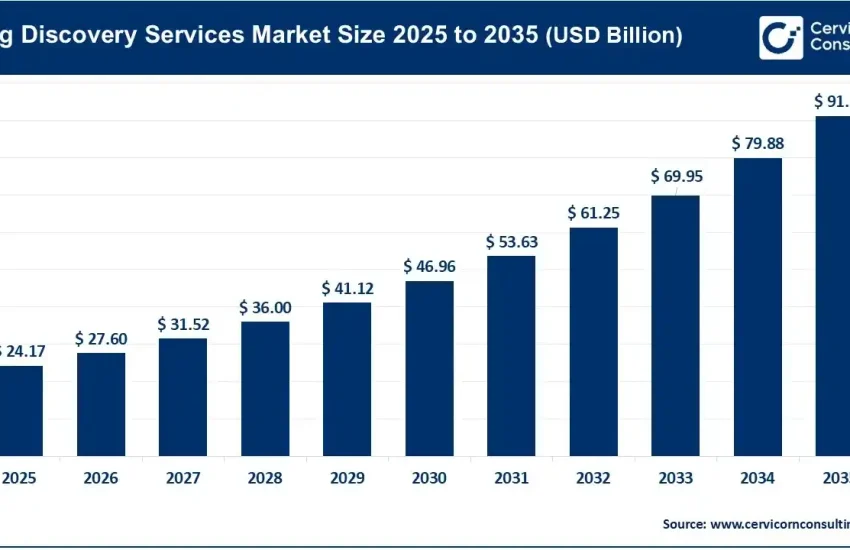
The global AI in oncology market was valued at approximately USD 3.24 billion in 2025 and is projected to reach USD 34.81 billion by 2035expanding at a CAGR of 26.8% during the forecast period.


AI in Oncology Market Growth Factors

The AI in oncology market is experiencing remarkable growth due to increasing global cancer incidence, expanding adoption of precision medicine, rapid advancements in machine learning and deep learning technologies, rising investments in healthcare AI solutions, growing availability of digital pathology and genomic datasets, increasing demand for personalized cancer therapies, expanding use of AI-powered medical imaging, greater integration of electronic health records with AI platforms, continuous innovations in biomarker discovery, increasing collaborations between pharmaceutical companies and AI developers, supportive government initiatives promoting digital healthcare, improved cloud computing infrastructure, growing demand for faster clinical decision-making, rising adoption of companion diagnostics, and increasing utilization of AI throughout oncology research, clinical trials, treatment optimization, and patient monitoring.


What is the AI in Oncology Market?

The AI in oncology market refers to the global ecosystem of artificial intelligence technologies developed specifically for cancer diagnosis, treatment planning, research, monitoring, and drug development. These solutions leverage advanced technologies such as machine learning, deep learning, natural language processing (NLP), computer vision, predictive analytics, and generative AI to assist healthcare professionals throughout the oncology workflow.

AI systems analyze multiple healthcare datasets including:

  • Medical imaging (MRI, CT, PET, mammography)
  • Digital pathology slides
  • Genomic sequencing data
  • Electronic Health Records (EHRs)
  • Laboratory reports
  • Clinical trial databases
  • Real-world evidence
  • Biomarker information

The objective is to support oncologists with faster, more accurate, and personalized clinical decisions while reducing diagnostic variability and improving treatment outcomes.

Today, AI applications extend across nearly every stage of cancer management, including:

  • Early cancer screening
  • Risk prediction
  • Tumor classification
  • Precision medicine
  • Radiation therapy planning
  • Drug discovery
  • Clinical trial matching
  • Remote patient monitoring
  • Recurrence prediction
  • Survival analysis

Get a Free Sample: https://www.cervicornconsulting.com/sample/2998


Why is AI in Oncology Important?

Cancer treatment has become increasingly complex due to the vast amount of clinical, imaging, molecular, and genomic information generated for each patient. AI enables healthcare professionals to process this information rapidly and identify clinically meaningful patterns that may not be immediately apparent through traditional analysis.

One of the most significant advantages of AI is its ability to detect cancers at earlier stages by recognizing subtle abnormalities in radiological and pathological images. Early diagnosis greatly increases treatment success rates while reducing healthcare costs associated with advanced disease management.

AI also accelerates precision oncology by matching patients with targeted therapies based on genetic mutations, molecular biomarkers, and tumor characteristics. Pharmaceutical companies increasingly rely on AI to identify novel drug targets, optimize clinical trial design, and shorten drug development timelines.

For healthcare providers, AI reduces diagnostic workload, improves consistency, minimizes human error, and supports evidence-based treatment planning. Patients benefit through personalized care pathways, improved survival rates, and more efficient access to innovative therapies.

As healthcare continues transitioning toward value-based care, AI has become an essential tool for improving both clinical outcomes and operational efficiency.


Leading Trends Transforming the AI in Oncology Market

Expansion of Precision Oncology

Healthcare providers increasingly utilize AI to integrate genomic sequencing, biomarker analysis, and molecular profiling into personalized treatment decisions. AI helps identify optimal therapies for individual patients while predicting treatment response and resistance.

Impact

  • Improved treatment effectiveness
  • Reduced adverse drug reactions
  • Enhanced patient survival
  • Greater adoption of targeted therapies

AI-Powered Digital Pathology

Digital pathology platforms are rapidly replacing conventional microscope-based workflows. AI algorithms analyze pathology slides within minutes while identifying cancer subtypes, grading tumors, and detecting microscopic abnormalities with high precision.

Impact

  • Faster diagnosis
  • Reduced pathologist workload
  • Improved diagnostic consistency
  • Enhanced laboratory efficiency

Integration of Multi-Omics Data

Modern oncology increasingly combines genomics, proteomics, metabolomics, transcriptomics, and clinical data. AI platforms integrate these diverse datasets to generate comprehensive insights into tumor biology.

Impact

  • Better biomarker discovery
  • More accurate disease prediction
  • Accelerated precision medicine
  • Improved clinical research

AI-Driven Drug Discovery

Pharmaceutical companies are increasingly using AI to identify therapeutic targets, predict molecular interactions, optimize drug candidates, and prioritize compounds before laboratory testing.

Impact

  • Reduced R&D costs
  • Faster drug development
  • Higher clinical trial success rates
  • Increased oncology innovation

Real-World Evidence Analytics

Healthcare organizations increasingly analyze electronic health records, insurance claims, cancer registries, and patient outcomes using AI to improve treatment strategies.

Impact

  • Better clinical decision-making
  • Enhanced population health management
  • Improved reimbursement planning
  • Stronger healthcare policies

AI-Assisted Medical Imaging

Computer vision algorithms continue improving detection accuracy across CT, MRI, PET, mammography, and ultrasound imaging.

Impact

  • Earlier cancer detection
  • Reduced false positives
  • Better tumor segmentation
  • More accurate treatment planning

Major Companies Driving the AI in Oncology Market

Company Specialization Key Focus Areas Notable Features Approx. 2025 Revenue* Estimated Market Position* Global Presence
Tempus AI, Inc. Precision oncology AI Clinical decision support, genomics, diagnostics Large multimodal oncology data platform integrating genomic and clinical information ~USD 1 billion Leading commercial AI-enabled precision oncology platform North America, Europe, partnerships across Asia
PathAI, Inc. Digital pathology AI pathology, biomarker discovery, pharmaceutical research Deep learning-based pathology image analysis for diagnostics and drug development Private company (revenue not publicly disclosed) Strong presence in AI pathology North America, Europe, global pharma collaborations
SOPHiA GENETICS SA Genomic analytics Cloud-based genomic interpretation, precision medicine AI-powered platform supporting genomic and radiomic analysis ~USD 70–80 million Recognized leader in genomic analytics Operations in over 70 countries
Guardant Health, Inc. Liquid biopsy Precision oncology, companion diagnostics, cancer screening AI-enhanced liquid biopsy solutions for early detection and treatment monitoring ~USD 900 million Major player in liquid biopsy and oncology diagnostics North America, Europe, Asia-Pacific
ConcertAI LLC Real-world oncology data Clinical research, predictive analytics, AI insights Extensive oncology real-world evidence platform supporting life sciences companies Private company (revenue not publicly disclosed) Strong position in oncology analytics North America, Europe, expanding global partnerships

Tempus AI, Inc.

Tempus AI has emerged as one of the world’s leading AI-powered precision oncology companies. Its platform integrates genomic sequencing, clinical records, pathology, imaging, and molecular data to help physicians personalize cancer treatment decisions. The company collaborates extensively with hospitals, pharmaceutical firms, and research organizations to accelerate precision medicine and clinical trial recruitment.


PathAI, Inc.

PathAI specializes in artificial intelligence solutions for digital pathology. Its advanced deep learning algorithms assist pathologists in identifying cancerous tissues, quantifying biomarkers, and improving diagnostic consistency. The company has established strategic collaborations with pharmaceutical companies to support companion diagnostics and oncology drug development.


SOPHiA GENETICS SA

SOPHiA GENETICS provides cloud-native AI solutions that enable healthcare providers to interpret complex genomic and radiomic data efficiently. Its platform supports precision oncology by helping clinicians identify clinically actionable genetic variants and recommend personalized treatment strategies.


Guardant Health, Inc.

Guardant Health is recognized globally for its AI-supported liquid biopsy technologies. Its non-invasive blood-based cancer tests enable earlier cancer detection, therapy selection, and continuous monitoring of treatment response. The company’s advanced analytics enhance the interpretation of circulating tumor DNA, supporting precision oncology across multiple cancer types.


ConcertAI LLC

ConcertAI focuses on leveraging artificial intelligence and real-world oncology data to improve clinical research, healthcare analytics, and pharmaceutical decision-making. By combining extensive patient datasets with predictive AI models, the company helps accelerate drug development, optimize clinical trials, and generate actionable insights for cancer care.


Successful Examples of AI in Oncology Market Around the World

Artificial intelligence is no longer confined to research laboratories—it has become an integral part of oncology workflows across hospitals, pharmaceutical companies, diagnostic laboratories, and academic institutions worldwide. Governments and healthcare organizations are investing heavily in AI-enabled cancer programs to improve early diagnosis, optimize treatment planning, reduce healthcare costs, and accelerate precision medicine. Below are some of the most successful implementations of AI in oncology across different regions.


United States: AI-Powered Precision Oncology

The United States remains the global leader in AI-driven oncology innovation due to its advanced healthcare infrastructure, strong biotechnology ecosystem, and extensive investments in cancer research. Leading cancer centers increasingly employ AI to analyze genomic profiles, radiology images, pathology slides, and electronic health records.

Institutions such as the Memorial Sloan Kettering Cancer Center, Mayo Clinic, MD Anderson Cancer Center, and Cleveland Clinic utilize AI-assisted platforms to support clinical decision-making, identify personalized therapies, and improve patient outcomes. AI also plays a significant role in matching eligible patients with oncology clinical trials, thereby accelerating pharmaceutical research.

Furthermore, leading biotechnology companies leverage AI to identify novel drug targets, predict treatment responses, and optimize immunotherapy development, making the United States the largest commercial market for AI in oncology solutions.


United Kingdom: Digital Pathology Transformation

The United Kingdom has become one of Europe’s pioneers in adopting AI-enabled pathology services. The National Health Service (NHS) has increasingly integrated digital pathology technologies to address workforce shortages and improve diagnostic efficiency.

AI-powered pathology software assists clinicians by automatically detecting cancerous tissue, classifying tumors, and quantifying biomarkers. These technologies significantly reduce diagnostic turnaround times while improving consistency across pathology departments.

Several NHS cancer centers are also utilizing AI-supported radiology systems for breast cancer screening, lung cancer detection, and treatment planning.


Germany: AI in Personalized Cancer Therapy

Germany’s healthcare system has embraced AI to strengthen personalized oncology and molecular diagnostics. Hospitals increasingly integrate genomic sequencing with AI platforms capable of identifying clinically actionable mutations and recommending targeted therapies.

German research institutes collaborate extensively with pharmaceutical companies to develop AI-driven biomarker discovery platforms and predictive treatment models. The country’s strong emphasis on precision medicine continues to drive investments in AI-powered oncology research.


Japan: Robotics and AI Integration

Japan combines artificial intelligence with advanced robotics and imaging technologies for cancer diagnosis and treatment planning.

Hospitals employ AI-assisted endoscopy systems capable of identifying early-stage gastrointestinal cancers with remarkable accuracy. AI also supports radiation oncology by improving tumor segmentation and optimizing radiation dose planning.

Japan’s aging population and increasing cancer burden continue encouraging healthcare providers to adopt AI solutions that improve efficiency while maintaining high-quality patient care.


China: Large-Scale AI Healthcare Deployment

China has emerged as one of the fastest-growing AI healthcare markets globally. Government-backed digital healthcare initiatives have encouraged hospitals to deploy AI platforms for cancer imaging, pathology, and clinical decision support.

Chinese technology companies collaborate with hospitals to develop deep learning algorithms capable of detecting lung cancer, liver cancer, breast cancer, and colorectal cancer from medical images.

The country’s vast patient population provides extensive datasets that help improve AI model performance and accelerate innovation.


India: Expanding AI-Based Cancer Screening

India is increasingly utilizing artificial intelligence to improve cancer screening in underserved and rural communities.

AI-powered diagnostic platforms assist physicians in detecting cervical cancer, oral cancer, breast cancer, and lung cancer where specialist availability is limited. Telemedicine combined with AI diagnostics enables faster consultations while reducing healthcare disparities across geographically diverse populations.

Government initiatives promoting digital health infrastructure are expected to further accelerate AI adoption in oncology over the coming years.


Global Regional Analysis

North America

North America dominates the global AI in oncology market and is expected to maintain its leadership throughout the forecast period. The region benefits from a highly developed healthcare ecosystem, substantial investments in artificial intelligence, widespread adoption of precision medicine, and strong collaboration among technology companies, pharmaceutical firms, and research institutions.

The United States accounts for the majority of regional revenue due to extensive deployment of AI across oncology imaging, pathology, genomics, and clinical decision support. Cancer centers increasingly rely on AI to improve diagnostic accuracy, personalize treatment selection, and optimize patient management.

The region also benefits from:

  • High healthcare expenditure
  • Strong venture capital investment
  • Advanced cloud infrastructure
  • Mature genomic sequencing industry
  • Large-scale oncology research programs
  • Rapid commercialization of AI healthcare startups

Government Initiatives Supporting Market Growth

  • The Cancer Moonshot Initiative continues supporting innovation in cancer prevention, diagnosis, and treatment through increased federal funding and collaborative research.
  • The National Cancer Institute (NCI) invests heavily in AI-based oncology research, cancer data infrastructure, and precision medicine initiatives.
  • The National Institutes of Health (NIH) funds AI-driven biomedical research, genomic analysis, and computational oncology projects.
  • The U.S. Food and Drug Administration (FDA) has established regulatory pathways for AI-enabled Software as a Medical Device (SaMD), encouraging responsible commercialization of AI-powered diagnostic tools.
  • Canada continues expanding national digital health strategies while supporting AI healthcare innovation through research funding and partnerships.

Europe

Europe represents one of the fastest-growing markets for AI in oncology due to increasing investments in digital healthcare, precision medicine, and cancer research. Countries including Germany, France, the United Kingdom, Italy, and the Netherlands are actively integrating AI into hospital workflows.

European healthcare providers increasingly adopt AI-powered digital pathology, radiology, genomic interpretation, and predictive analytics to improve cancer diagnosis and treatment planning.

Major market drivers include:

  • Universal healthcare systems
  • Strong academic research
  • Expanding precision oncology programs
  • Cross-border healthcare collaborations
  • Increasing adoption of electronic health records
  • Rising investments in healthcare digitization

Government Initiatives

  • The European Commission’s AI strategy promotes trustworthy AI development across healthcare applications.
  • The Europe’s Beating Cancer Plan encourages digital innovation, AI-assisted diagnostics, and personalized cancer treatment.
  • The Horizon Europe Programme provides significant funding for AI healthcare research and cancer innovation.
  • National governments continue investing in genomic medicine programs and digital pathology infrastructure.

Asia-Pacific

Asia-Pacific is projected to experience the fastest growth in the AI in oncology market during the forecast period. Rapid healthcare digitalization, increasing cancer prevalence, improving healthcare infrastructure, and supportive government policies are driving widespread AI adoption.

China, Japan, South Korea, India, Singapore, and Australia are making significant investments in AI-powered healthcare technologies.

Growth drivers include:

  • Large patient populations
  • Rising healthcare spending
  • Expansion of precision medicine
  • Government-supported AI programs
  • Growing pharmaceutical research
  • Increasing availability of digital health records

China has become a major AI innovation hub, while Japan focuses on robotics and precision medicine. India continues expanding AI-assisted cancer screening programs to improve access in underserved regions.

Government Initiatives

  • China’s New Generation Artificial Intelligence Development Plan encourages AI integration across healthcare and medical research.
  • Japan supports AI-driven healthcare innovation through national digital transformation initiatives and investments in medical AI.
  • India’s National Digital Health Mission (NDHM) strengthens digital health infrastructure, enabling greater adoption of AI-based diagnostics and clinical decision support.
  • South Korea’s national AI strategy promotes intelligent healthcare systems and precision medicine.

Latin America

Latin America is gradually adopting AI technologies within oncology, supported by healthcare modernization and expanding digital infrastructure.

Brazil and Mexico represent the largest regional markets, where hospitals increasingly deploy AI for medical imaging, pathology, and tele-oncology services.

Challenges remain regarding healthcare funding, infrastructure disparities, and specialist shortages. Nevertheless, AI offers significant opportunities to improve diagnostic access and optimize limited healthcare resources.

Government Initiatives

Governments across Latin America continue investing in:

  • National digital health strategies
  • Electronic medical records
  • Telemedicine expansion
  • AI research collaborations
  • Cancer screening modernization

These initiatives are expected to stimulate long-term market growth.


Middle East & Africa

The Middle East & Africa region is witnessing increasing adoption of AI in oncology as governments prioritize healthcare modernization and digital transformation.

Countries including Saudi Arabia, the United Arab Emirates, Qatar, and South Africa are investing in AI-enabled hospitals, precision medicine, and advanced cancer care.

Healthcare providers increasingly deploy AI for:

  • Radiology interpretation
  • Digital pathology
  • Clinical decision support
  • Oncology workflow optimization
  • Population health analytics

Government Initiatives

Several governments are actively supporting AI healthcare adoption through national digital transformation programs.

Key examples include:

  • Saudi Vision 2030, which prioritizes AI adoption, healthcare digitization, and advanced medical technologies.
  • The UAE National Strategy for Artificial Intelligence promotes AI integration across healthcare services, including oncology.
  • National precision medicine initiatives continue expanding genomic research and personalized cancer treatment across Gulf Cooperation Council (GCC) countries.

Emerging Opportunities in the AI in Oncology Market

The future of the AI in oncology market is being shaped by rapid technological advancements and the growing need for precision, efficiency, and personalized care. Several high-growth opportunities are expected to accelerate market expansion over the next decade.

Generative AI in Clinical Decision Support

Generative AI models are increasingly being developed to summarize patient records, recommend evidence-based treatment options, assist multidisciplinary tumor boards, and support oncologists with real-time clinical insights. These capabilities can significantly reduce administrative burden while improving decision-making.

Multi-Omics Integration

The convergence of genomics, proteomics, transcriptomics, metabolomics, and clinical data through AI will enable a deeper understanding of tumor biology. This integrated approach is expected to enhance biomarker discovery, improve risk prediction, and support more personalized therapies.

AI-Enabled Drug Discovery and Clinical Trials

AI is transforming oncology drug development by identifying therapeutic targets, predicting drug efficacy, optimizing molecule design, and streamlining patient recruitment for clinical trials. These advancements can shorten development timelines, reduce costs, and improve trial success rates.

Remote Monitoring and Predictive Care

Wearable devices, mobile health applications, and AI-driven analytics are enabling continuous monitoring of cancer patients outside clinical settings. Predictive models can detect complications earlier, support timely interventions, and improve long-term patient outcomes.

Federated Learning and Privacy-Preserving AI

As healthcare organizations prioritize data privacy, federated learning allows AI models to be trained across multiple institutions without sharing sensitive patient data. This approach supports collaborative research while complying with stringent data protection regulations.

Expansion in Emerging Markets

Developing economies are expected to witness significant adoption of AI in oncology as governments invest in digital health infrastructure, telemedicine, and cancer screening programs. AI-powered diagnostic tools can help address shortages of oncology specialists and improve access to quality cancer care in underserved regions.

These opportunities indicate that AI will continue to evolve from a supportive technology into a core component of oncology practice, enabling more accurate diagnoses, personalized treatments, accelerated research, and improved patient outcomes worldwide.

To Get Detailed Overview, Contact Us: https://www.cervicornconsulting.com/contact-us

Read Report: AI Supercomputer Market Revenue, Trends, and Strategic Insights by 2035