Obesity Treatment Market Revenue, Trends, and Strategic Insights by 2035
Obesity Treatment Market Size
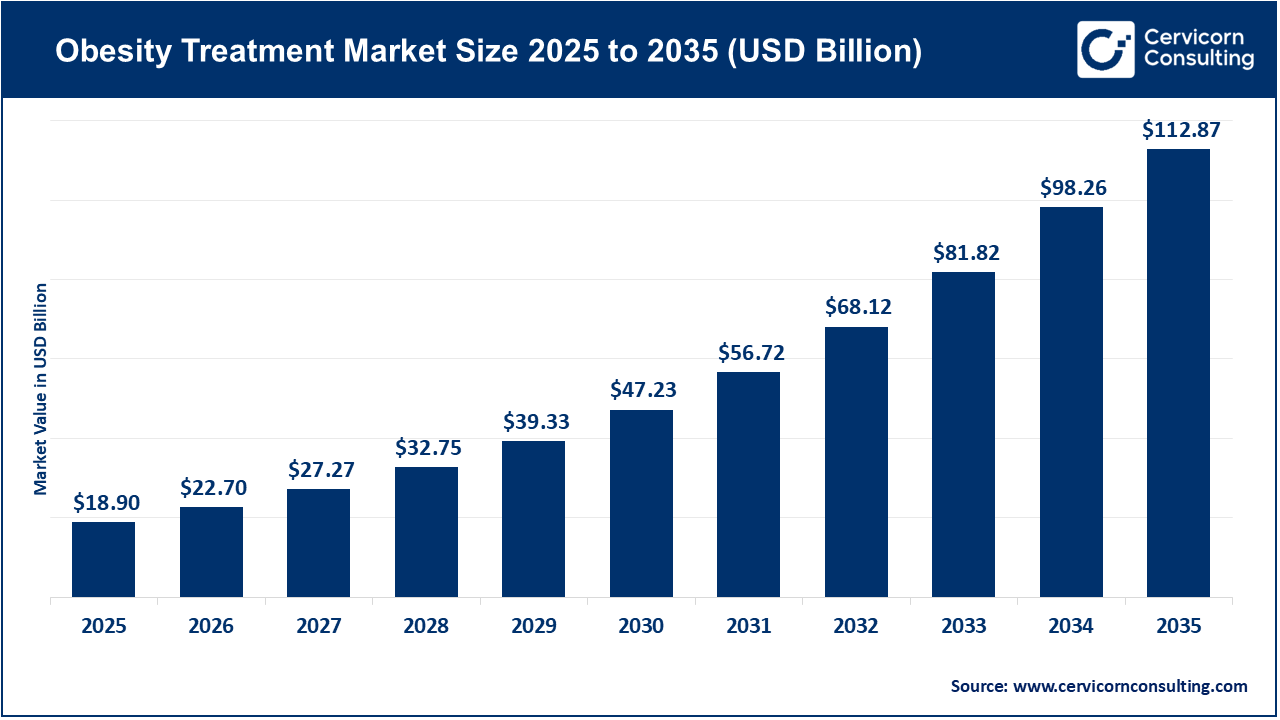
The global obesity treatment market was valued at approximately USD 18.90 billion in 2025 and is projected to reach nearly USD 112.87 billion by 2035, growing at a CAGR of 19.57%.
Obesity Treatment Market Growth Factors
The obesity treatment market is experiencing remarkable growth due to the rapidly increasing prevalence of obesity across developed and developing economies, growing awareness regarding obesity-related chronic diseases, rising healthcare expenditures, favorable reimbursement policies for anti-obesity medications in several countries, increasing adoption of GLP-1 receptor agonists and next-generation weight-loss therapies, expanding bariatric surgery procedures, technological advancements in digital health and personalized weight management programs, supportive government initiatives promoting healthy lifestyles, increasing investments in obesity drug research and development, growing acceptance of obesity as a chronic disease rather than a lifestyle issue, improving accessibility to telemedicine-based obesity management services, and continuous innovation by pharmaceutical companies introducing highly effective medications with improved long-term clinical outcomes.
What is the Obesity Treatment Market?
The obesity treatment market encompasses pharmaceutical drugs, medical devices, bariatric surgeries, behavioral therapy programs, nutritional interventions, digital weight management platforms, and healthcare services designed to help individuals reduce excessive body weight and prevent obesity-related complications.
Obesity has become one of the most significant global public health challenges. According to international health organizations, obesity substantially increases the risk of developing cardiovascular disease, type 2 diabetes, hypertension, stroke, sleep apnea, osteoarthritis, fatty liver disease, infertility, and several forms of cancer.
The market includes multiple treatment approaches such as:
- Prescription anti-obesity medications
- GLP-1 receptor agonists
- Dual and triple hormone agonists
- Bariatric surgical procedures
- Lifestyle modification programs
- Medical nutrition therapy
- Digital health coaching
- Remote patient monitoring
- Behavioral counseling
- Personalized metabolic treatment
Recent breakthroughs in incretin-based therapies have transformed obesity treatment, delivering significantly higher and more sustainable weight loss than previous generations of medications. This has dramatically expanded patient acceptance and physician confidence in pharmacological obesity management.
Get a Free Sample: https://www.cervicornconsulting.com/sample/2634
Why is the Obesity Treatment Market Important?
The obesity treatment market plays a vital role in improving global healthcare outcomes by addressing one of the leading preventable causes of chronic disease.
Its importance extends across multiple dimensions:
Reducing Chronic Disease Burden
Effective obesity treatment lowers the risk of diabetes, cardiovascular diseases, hypertension, metabolic syndrome, and kidney disease.
Improving Quality of Life
Weight reduction improves mobility, mental health, physical fitness, sleep quality, reproductive health, and overall wellbeing.
Lowering Healthcare Costs
Obesity-related illnesses account for substantial healthcare expenditures worldwide. Early intervention reduces long-term treatment costs and hospital admissions.
Increasing Workforce Productivity
Healthier individuals experience fewer sick days, higher productivity, and improved workplace participation.
Supporting Healthy Aging
Weight management reduces age-related disabilities and improves long-term independence among older adults.
Driving Pharmaceutical Innovation
The success of modern anti-obesity medications has encouraged unprecedented investment in metabolic disease research and next-generation therapeutics.
Major Companies Operating in the Obesity Treatment Market
| Company | Specialization | Key Focus Areas | Notable Features | 2025 Revenue* | Estimated Market Position | Global Presence |
|---|---|---|---|---|---|---|
| GlaxoSmithKline plc | Pharmaceuticals and vaccines | Metabolic research, immunology, specialty medicines | Strong global R&D capabilities and broad healthcare portfolio | Approximately US$40+ billion | Emerging participant in metabolic research | More than 100 countries |
| Novo Nordisk A/S | Diabetes and obesity therapeutics | GLP-1 medicines, obesity management, endocrinology | Market-leading obesity medicines including Wegovy and extensive metabolic disease expertise | Approximately DKK 300+ billion annual sales | Global leader in prescription obesity therapeutics | Operations in over 170 countries |
| VIVUS LLC | Specialty pharmaceuticals | Weight management and metabolic disorders | Early commercial anti-obesity therapies with combination drug expertise | Privately held; detailed 2025 revenue not publicly disclosed | Niche market participant | North America with international licensing partnerships |
| AstraZeneca | Biopharmaceuticals | Cardiovascular, renal, metabolic diseases | Expanding cardiometabolic pipeline and precision medicine research | US$58.7 billion | Growing presence through metabolic disease research | More than 125 countries |
| Rhythm Pharmaceuticals, Inc. | Rare obesity disorders | Genetic obesity treatments | Developer of IMCIVREE for rare genetic obesity conditions | Approximately US$195 million | Leader in rare genetic obesity therapies | North America, Europe, and selected international markets |
Leading Trends Shaping the Obesity Treatment Market
Rapid Expansion of GLP-1 Therapies
GLP-1 receptor agonists have revolutionized obesity management by producing clinically meaningful weight loss while improving glycemic control and cardiovascular outcomes.
Healthcare providers increasingly prescribe these therapies as first-line pharmaceutical treatment for eligible patients.
Impact
- Improved patient adherence
- Better long-term outcomes
- Increased pharmaceutical revenues
- Higher insurance interest in reimbursement
Personalized Obesity Medicine
Healthcare providers are increasingly tailoring treatment based on:
- Genetics
- Metabolism
- Lifestyle
- Hormonal profiles
- Behavioral characteristics
Personalized treatment plans improve clinical effectiveness while reducing adverse events.
Impact
- Higher treatment success rates
- Better patient satisfaction
- More efficient healthcare resource utilization
Digital Health Integration
Artificial intelligence, wearable devices, and mobile health applications now support obesity management through:
- Diet monitoring
- Exercise tracking
- Medication reminders
- Behavioral coaching
- Telehealth consultations
Impact
Digital care significantly improves long-term patient engagement and treatment adherence.
Increasing Combination Therapies
Researchers are developing therapies that combine multiple hormonal pathways to achieve greater weight reduction than existing treatments.
Pipeline drugs targeting GLP-1, GIP, glucagon, and other metabolic hormones continue to expand.
Impact
- Greater clinical effectiveness
- Improved metabolic health
- Expanded treatment options
Growing Bariatric Surgery Adoption
Despite pharmaceutical advances, bariatric surgery remains highly effective for severe obesity.
Minimally invasive surgical techniques continue improving patient outcomes while reducing recovery times.
Impact
- Higher success rates
- Reduced postoperative complications
- Better long-term disease remission
Greater Recognition of Obesity as a Chronic Disease
Medical associations and policymakers increasingly recognize obesity as a chronic medical condition requiring long-term treatment rather than solely lifestyle modification.
Impact
- Increased insurance coverage
- Reduced social stigma
- Earlier diagnosis
- Expanded patient access
Successful Examples of the Obesity Treatment Market Around the World
Denmark
Denmark has become a global leader through the commercialization of innovative obesity therapies developed by Novo Nordisk.
Its investment in metabolic research has transformed obesity treatment worldwide.
United States
The U.S. represents the world’s largest obesity treatment market due to:
- High obesity prevalence
- Advanced pharmaceutical innovation
- Extensive clinical research
- Growing insurance reimbursement
- Strong digital healthcare adoption
Major academic hospitals integrate medications, surgery, nutrition, and behavioral counseling into comprehensive obesity care programs.
United Kingdom
The UK National Health Service has expanded structured weight management services for eligible patients while promoting healthier lifestyles through national obesity strategies.
Digital health services continue supporting community-based weight management.
Japan
Japan emphasizes early intervention through preventive healthcare programs, nutrition education, workplace wellness initiatives, and metabolic screening.
Government policies encourage routine health examinations and obesity prevention.
Australia
Australia combines:
- Lifestyle intervention
- Bariatric surgery
- Specialist obesity clinics
- Digital monitoring
- Multidisciplinary care teams
This integrated model has improved long-term weight management outcomes.
Middle East
Countries including Saudi Arabia and the United Arab Emirates are investing heavily in obesity awareness campaigns, specialized obesity clinics, and digital healthcare solutions due to rising obesity prevalence.
Global Regional Analysis
North America
North America dominates the obesity treatment market owing to:
- High obesity prevalence
- Strong pharmaceutical innovation
- Favorable reimbursement expansion
- Advanced healthcare infrastructure
- Significant clinical trial activity
- High patient awareness
The United States remains the largest contributor, supported by increasing prescriptions for advanced obesity medications and ongoing investment in next-generation metabolic therapies.
Government Initiatives and Policies
Government agencies support:
- Obesity prevention campaigns
- Nutrition labeling regulations
- School nutrition programs
- Diabetes prevention initiatives
- Research funding for metabolic diseases
- Expanded access to obesity treatment for eligible populations
Europe
Europe represents one of the fastest-growing obesity treatment markets.
Key growth drivers include:
- Aging populations
- Rising obesity rates
- Government prevention strategies
- Expanding reimbursement
- Strong pharmaceutical manufacturing
- Growing awareness among healthcare providers
Countries including Germany, France, the United Kingdom, Italy, and Nordic nations continue expanding obesity treatment access.
Government Initiatives and Policies
European governments promote:
- Sugar reduction programs
- Food labeling regulations
- Public exercise campaigns
- Healthy school meal standards
- Preventive healthcare policies
- Obesity screening initiatives
The European healthcare system increasingly supports evidence-based obesity management.
Asia-Pacific
Asia-Pacific is expected to witness the fastest growth during the forecast period.
Major growth drivers include:
- Rapid urbanization
- Sedentary lifestyles
- Rising disposable incomes
- Increasing childhood obesity
- Expanding healthcare infrastructure
- Growing awareness of obesity complications
China, India, Japan, South Korea, and Australia represent major regional growth markets.
Government Initiatives and Policies
Governments have introduced:
- National nutrition policies
- School health programs
- Physical activity campaigns
- Diabetes prevention initiatives
- Healthy city programs
- Public awareness campaigns regarding obesity
Healthcare investment across Asia-Pacific continues improving access to obesity treatment services.
Latin America
Latin America continues experiencing increasing obesity prevalence because of:
- Dietary transitions
- Urban lifestyles
- Rising diabetes incidence
- Improved healthcare accessibility
Brazil, Mexico, Argentina, and Chile remain key markets.
Government Initiatives and Policies
Governments support:
- Food labeling laws
- School nutrition improvements
- Public exercise initiatives
- Sugar-sweetened beverage regulations
- Community healthcare programs
These initiatives encourage healthier dietary behaviors while supporting obesity prevention.
Middle East & Africa
The Middle East and Africa represent an emerging market with strong long-term potential.
Rapid economic development, urbanization, reduced physical activity, and changing dietary habits have contributed to increasing obesity prevalence.
Healthcare investments continue expanding obesity diagnosis and treatment services.
Government Initiatives and Policies
Governments across the region are implementing:
- National Vision healthcare reforms
- Obesity awareness campaigns
- School wellness programs
- Digital health initiatives
- Preventive medicine strategies
- Investments in specialist metabolic disease centers
Several Gulf countries are integrating obesity management into broader non-communicable disease control strategies.
Future Outlook of the Obesity Treatment Market
The obesity treatment market is expected to remain one of the fastest-growing segments within the global pharmaceutical and healthcare industry. Continuous innovation in incretin-based medicines, oral obesity therapies, precision medicine, digital therapeutics, and integrated care models is likely to expand treatment accessibility and improve long-term outcomes. Increased public awareness, supportive regulatory frameworks, greater recognition of obesity as a chronic disease, and sustained investment in research and development will continue driving market expansion across both developed and emerging economies.
To Get Detailed Overview, Contact Us: https://www.cervicornconsulting.com/contact-us
Read Report: Last Mile Delivery Market Revenue, Trends, and Strategic Insights by 2035