


Hydrogen Blending Market: 6 Decisions Companies Should Make to Balance Infrastructure Costs, Safety, and Decarbonization
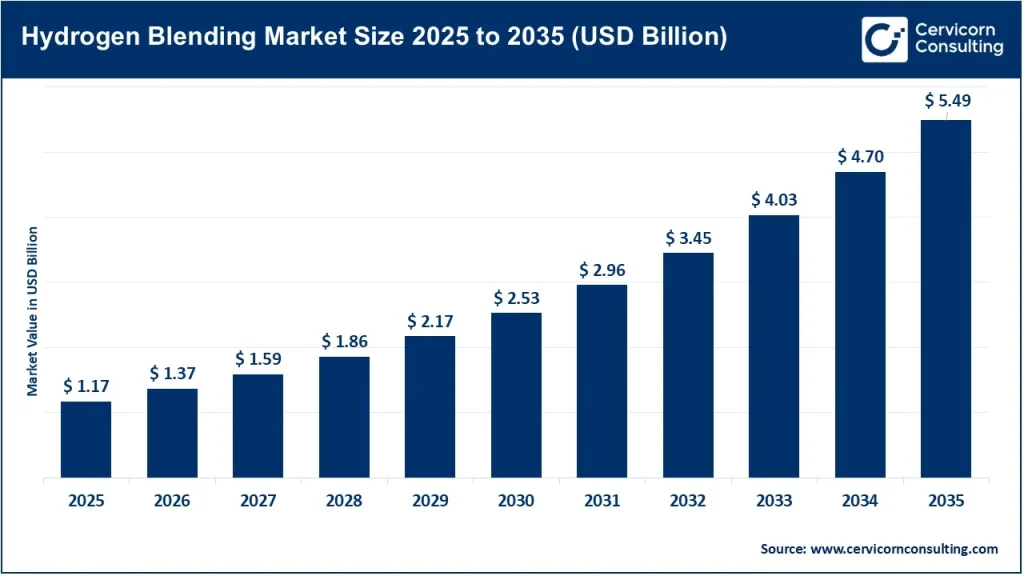
The global hydrogen blending market was valued at USD 1.17 billion in 2025 and is projected to reach USD 5.49 billion by 2035, growing at a CAGR of 16.8% from 2026 to 2035. Hydrogen blending, which involves mixing hydrogen with natural gas for transportation through existing pipeline networks, is gaining attention as energy companies explore ways to reduce emissions without immediately replacing their entire gas infrastructure.
However, commercial adoption depends on more than hydrogen availability or decarbonization targets. Pipeline compatibility, hydrogen production costs, end-user equipment, regulatory requirements, and the economics of blending at different concentrations can significantly influence project viability.
For gas utilities, pipeline operators, hydrogen producers, industrial manufacturers, and power generation companies, the challenge is determining where hydrogen blending offers a practical advantage—and where alternative decarbonization pathways may deliver better results.
1. Which Hydrogen Blending Ratio Offers the Best Balance Between Cost and Performance?
Selecting the appropriate hydrogen blending ratio is one of the first decisions for companies evaluating a hydrogen blending project. Higher concentrations can increase the amount of hydrogen delivered through an existing network, but they may also introduce additional technical requirements and infrastructure costs.
Hydrogen behaves differently from natural gas in several important respects. Its lower volumetric energy density means that a blended gas generally delivers less energy per unit of volume as the hydrogen proportion increases. Its molecular characteristics also influence leakage, metering, compression, combustion, and material compatibility.
Companies should therefore evaluate blending ratios against the operating requirements of each network rather than adopt a single target across all assets.
Key decisions companies should make:
- Low-concentration blending: Assess whether a lower hydrogen percentage can deliver meaningful emissions reductions with limited equipment modifications.
- Medium-concentration blending: Determine whether higher blending levels justify additional investment in monitoring, leak detection, and equipment upgrades.
- Higher-concentration blending: Evaluate whether pipeline modifications, certified appliances, and more extensive safety procedures make the project commercially viable.
- Long-term infrastructure planning: Compare incremental blending with the cost of developing dedicated hydrogen pipelines or transitioning selected networks to hydrogen.
The appropriate ratio will depend on the network’s design, the intended end users, the hydrogen supply price, and applicable regulations. A technically feasible blend is not automatically an economically attractive one.
Get a Free Sample: https://www.cervicornconsulting.com/sample/2967
2. Is Existing Pipeline Infrastructure Ready for Hydrogen?
Repurposing natural gas pipelines can reduce the need for entirely new infrastructure, but existing assets should not be assumed to be hydrogen-ready. Compatibility can vary according to pipeline materials, operating pressure, weld integrity, compressor design, valves, seals, meters, and the condition of connected equipment.
Hydrogen can increase the risk of material degradation in susceptible steels under certain operating conditions. Its small molecular size also makes leakage control an important consideration. These factors can affect both capital expenditure and maintenance requirements.
India’s Petroleum and Natural Gas Regulatory Board (PNGRB) has been examining hydrogen blending through technical studies, pilot projects, infrastructure assessments, and the development of safety standards. Its work has included evaluating different blending concentrations, pipeline suitability, end-user impacts, and the potential costs of deblending. These activities highlight why infrastructure readiness must be established asset by asset.
Key decisions companies should make:
- Conduct pipeline integrity assessments before selecting blending locations.
- Identify components that require replacement, retrofitting, or hydrogen-compatible certification.
- Evaluate compressor stations, pressure regulation systems, storage facilities, and metering equipment.
- Establish monitoring procedures for leaks, pressure changes, and operating performance.
- Compare retrofit costs with the long-term economics of dedicated hydrogen infrastructure.
Business implication: Companies with extensive existing gas networks may have a strategic advantage, but the value of that advantage depends on the proportion of assets that can be adapted safely and economically.
3. Can Hydrogen Supply Costs Support a Viable Blending Business Model?
The economics of hydrogen blending depend on more than the cost of producing hydrogen. Procurement contracts, transportation, compression, storage, blending equipment, electricity prices, and the cost of maintaining hydrogen-compatible infrastructure can all influence the final delivered cost.
Green hydrogen produced using renewable electricity may support lower-emission energy pathways, but its economics depend on renewable power availability, electrolyzer utilization, financing, and local production conditions. Blue hydrogen may offer another supply pathway where natural gas, carbon capture infrastructure, and appropriate emissions controls are available. Neither option should be evaluated without considering its full supply-chain emissions and costs.
Companies should also assess the energy content of the delivered gas. Because hydrogen contains less energy per unit of volume than natural gas, replacing a portion of natural gas volume with hydrogen does not produce an equivalent reduction in fossil fuel consumption or emissions.
Key decisions companies should make:
- Compare locally produced hydrogen with contracted or imported supplies.
- Model delivered hydrogen costs under different electricity and natural gas price scenarios.
- Account for blending skid installation, compression, metering, storage, and maintenance.
- Evaluate whether emissions reductions justify the additional cost relative to electrification, energy efficiency, biomethane, or other alternatives.
- Test the sensitivity of project returns to hydrogen availability, utilization rates, carbon prices, and policy incentives.
A viable business case should demonstrate the cost per unit of useful energy delivered and the cost per tonne of emissions avoided—not simply the volume of hydrogen blended.
4. Which End-Use Applications Should Companies Prioritize?
Hydrogen blending can serve multiple applications, including gas distribution networks, industrial process heating, power generation, combined heat and power systems, and hydrogen-enriched compressed natural gas. However, the technical and commercial suitability of each application varies.
Industrial facilities with continuous thermal energy requirements may assess blending as part of a broader decarbonization strategy. Gas utilities may focus on network compatibility and the needs of connected customers, while power producers must consider combustion performance, turbine specifications, efficiency, and emissions.
Residential and commercial users introduce additional considerations because connected appliances and equipment may not be certified for every hydrogen concentration.
Key decisions companies should make:
- Gas utilities: Identify customer groups and network sections suitable for controlled blending trials.
- Industrial manufacturers: Evaluate burner compatibility, product quality, process temperatures, and potential production interruptions.
- Power generators: Confirm turbine and boiler compatibility, performance impacts, and emissions requirements.
- Transportation operators: Assess the economics and technical requirements of hydrogen-enriched compressed natural gas against alternative vehicle fuels.
- Commercial and residential suppliers: Verify appliance compatibility and applicable safety requirements before changing the supplied gas composition.
Prioritizing applications with predictable demand, manageable infrastructure requirements, and measurable emissions benefits can help companies limit early-stage risk.
5. How Should Companies Manage Safety, Regulation, and End-User Compatibility?
Hydrogen blending introduces operational and regulatory questions that extend beyond the pipeline itself. Gas composition can affect combustion characteristics, metering accuracy, equipment performance, and the requirements for leak detection and emergency response.
Regulatory acceptance also varies by jurisdiction, network type, blending concentration, and application. Companies operating across multiple markets should not assume that approval for one blending project establishes a universal operating limit.
In July 2025, the UK Department for Energy Security and Net Zero published a study assessing the potential impacts of hydrogen blends of up to 2%, 5%, and 20% by volume in the National Transmission System. The work examined safety, operability, performance, efficiency, equipment modifications, associated costs, and end-user readiness. The findings illustrate the importance of evaluating both network assets and connected users before scaling deployment.
Key decisions companies should make:
- Map applicable pipeline, gas-quality, metering, appliance, and environmental requirements.
- Establish clear operating limits and procedures for changes in hydrogen concentration.
- Determine whether connected equipment requires inspection, replacement, or certification.
- Develop emergency response, leak detection, and incident reporting protocols.
- Define responsibility for monitoring, maintenance, and customer communication across the supply chain.
Companies should build regulatory and safety reviews into project design from the beginning. Delaying these assessments until commissioning can increase redesign costs and postpone commercial operation.
6. Should Companies Invest in Blending Today or Prepare for Dedicated Hydrogen Networks?
Hydrogen blending can provide a transitional route for selected gas networks, but it should not automatically be treated as the final infrastructure strategy. As hydrogen demand grows, some industrial clusters and transportation corridors may require dedicated pipelines capable of carrying pure hydrogen.
The decision depends on expected hydrogen demand, network condition, the location of production and consumption, anticipated blending limits, and the cost of adapting existing infrastructure. Companies that invest exclusively in short-term blending solutions may face additional conversion costs if their long-term strategy requires dedicated hydrogen transport.
Key decisions companies should make:
- Compare blending with dedicated hydrogen pipelines, electrification, and other decarbonization options.
- Identify industrial clusters where future hydrogen demand could support dedicated infrastructure.
- Assess whether proposed retrofits can accommodate future changes in gas composition.
- Develop phased investment plans linked to supply availability, customer demand, and regulatory milestones.
- Evaluate partnerships with gas utilities, electrolyzer developers, industrial consumers, and infrastructure operators to share costs and risks.
The strongest strategy may combine near-term blending pilots with long-term planning for dedicated hydrogen transport, rather than committing all available capital to a single pathway.
What Should Companies Evaluate Before Entering the Hydrogen Blending Market?
Hydrogen blending creates opportunities for pipeline operators, gas utilities, hydrogen producers, equipment manufacturers, industrial energy users, and power companies. However, market growth alone does not establish the viability of an individual project.
Before committing capital, decision-makers should assess five factors:
- Infrastructure readiness: Can existing pipelines and connected equipment accommodate the proposed blend?
- Supply economics: Is hydrogen available at a competitive delivered cost and in sufficient volumes?
- Regulatory certainty: Are the required technical approvals, standards, and operating permissions in place?
- End-user suitability: Can customers use the blended gas without unacceptable performance, safety, or conversion costs?
- Long-term strategic fit: Does blending support the company’s broader decarbonization and infrastructure investment plans?
Companies that answer these questions early can better identify viable deployment locations, avoid unsuitable investments, and prioritize projects with measurable operational and environmental benefits.
Conclusion
The hydrogen blending market is expanding as energy companies seek practical pathways to decarbonize existing gas infrastructure. Yet the opportunity is not simply about injecting more hydrogen into natural gas networks. It is about selecting the right blend ratio, verifying infrastructure compatibility, securing economical hydrogen supplies, protecting end users, and determining whether blending remains the best long-term solution.
For decision-makers, a disciplined assessment of technical feasibility, delivered energy costs, regulatory requirements, and future infrastructure needs will be essential to turning hydrogen blending from a demonstration project into a commercially sustainable operation.
To Get Detailed Overview, Contact Us: https://www.cervicornconsulting.com/contact-us