


Table of Contents
ToggleHealthcare Gamification Market Size
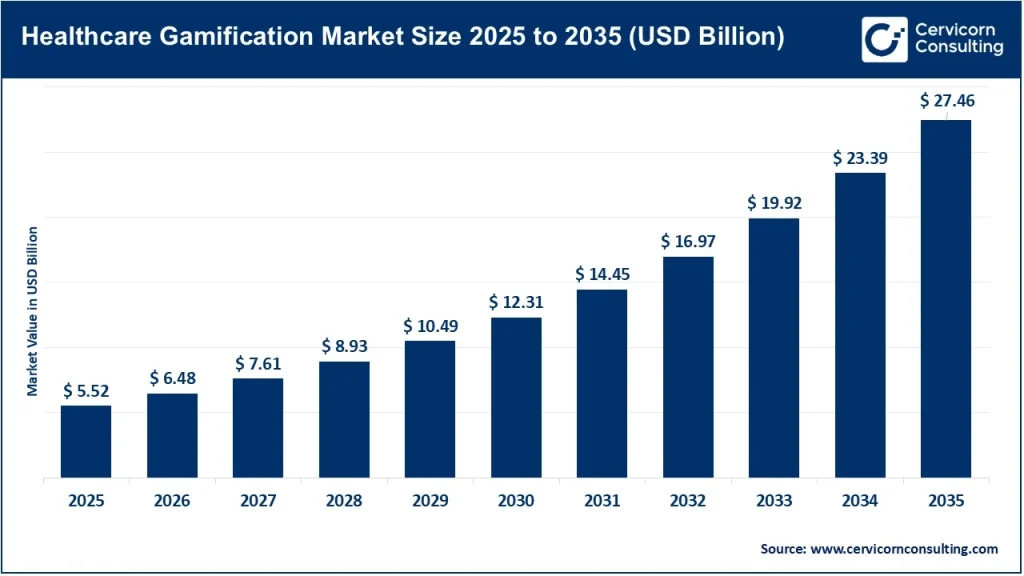
The global healthcare gamification market size was valued at approximately USD 5.52 billion in 2025 and is projected to reach nearly USD 27.46 billion by 2035, growing at a CAGR of 17.4%.
What is the Healthcare Gamification Market?
The healthcare gamification market refers to the industry focused on developing and implementing game-based techniques and motivational tools within healthcare applications, wellness programs, fitness platforms, chronic disease management solutions, telehealth services, and patient engagement systems.
Healthcare gamification utilizes elements commonly found in video games and digital entertainment, including:
- Reward points and badges
- Progress tracking
- Leaderboards
- Daily challenges
- Social competitions
- Virtual incentives
- Achievement milestones
- Personalized health goals
These features encourage users to actively participate in health-related activities such as exercising, medication adherence, disease management, mental wellness practices, and preventive screenings.
The market encompasses software developers, digital health startups, wearable technology companies, healthcare providers, insurers, pharmaceutical companies, and wellness organizations that leverage gamification to improve healthcare outcomes.
Get a Free Sample: https://www.cervicornconsulting.com/sample/2980
Healthcare Gamification Market Growth Factors
The healthcare gamification market is experiencing rapid growth due to increasing adoption of digital health technologies, rising prevalence of chronic diseases, growing use of smartphones and wearable devices, expanding telehealth services, increasing healthcare consumerization, demand for patient-centric care models, advancements in artificial intelligence and data analytics, growing focus on preventive healthcare, rising healthcare expenditure worldwide, enhanced employee wellness initiatives, increasing demand for personalized health experiences, supportive government digital health programs, expansion of remote patient monitoring solutions, growing awareness of mental health management, and the proven effectiveness of behavioral science-driven engagement strategies in improving treatment adherence and health outcomes.
Why is Healthcare Gamification Important?
Healthcare systems worldwide face a common challenge: motivating individuals to maintain healthy behaviors over extended periods.
Traditional healthcare approaches often struggle with:
- Poor medication adherence
- Low patient engagement
- Missed appointments
- Lack of preventive care participation
- Limited physical activity
- Poor chronic disease management
Healthcare gamification addresses these issues by making health management more interactive, engaging, and rewarding.
Benefits for Patients
Improved Motivation
Gamified platforms provide continuous encouragement through rewards, progress indicators, and milestone achievements.
Better Treatment Adherence
Patients become more likely to follow medication schedules and treatment plans when they receive instant feedback and recognition.
Enhanced Health Literacy
Interactive educational modules improve understanding of diseases, treatments, and preventive healthcare.
Mental Health Support
Gamification techniques reduce stress and anxiety while encouraging mindfulness and healthy lifestyle habits.
Benefits for Healthcare Providers
- Increased patient engagement
- Better clinical outcomes
- Reduced hospital readmissions
- Enhanced patient satisfaction
- Lower healthcare costs
Benefits for Employers and Insurers
- Reduced healthcare expenses
- Improved workforce productivity
- Better wellness program participation
- Lower absenteeism rates
Leading Trends Shaping the Healthcare Gamification Market
AI-Powered Personalized Gamification
Artificial intelligence is revolutionizing healthcare gamification by creating personalized experiences based on user behavior, medical history, and health goals.
AI systems can:
- Recommend tailored health challenges
- Predict engagement levels
- Adjust rewards dynamically
- Provide personalized coaching
Market Impact
Personalized engagement significantly improves user retention and long-term participation in wellness programs.
Integration with Wearable Devices
Wearable technologies have become central to healthcare gamification.
Popular devices track:
- Heart rate
- Sleep patterns
- Physical activity
- Blood oxygen levels
- Stress indicators
These metrics are automatically incorporated into gamified health platforms.
Market Impact
Real-time data collection improves user engagement and enables continuous health monitoring.
Chronic Disease Management Programs
Healthcare providers increasingly use gamification to support patients with:
- Diabetes
- Hypertension
- Obesity
- Cardiovascular diseases
- Respiratory disorders
Gamified reminders, educational content, and achievement systems encourage better self-management.
Market Impact
Improved adherence leads to reduced healthcare costs and better patient outcomes.
Mental Health and Wellness Applications
Mental health platforms are increasingly incorporating gamification elements.
Features include:
- Meditation streaks
- Mood tracking
- Wellness challenges
- Reward-based therapy exercises
Market Impact
Gamification enhances user commitment to mental health improvement programs.
Corporate Wellness Programs
Organizations worldwide are investing heavily in employee wellness platforms featuring gamified health initiatives.
Common activities include:
- Step-count competitions
- Fitness challenges
- Wellness rewards
- Team-based health goals
Market Impact
Corporate wellness adoption is becoming a major revenue source for healthcare gamification providers.
Social and Community-Based Engagement
Healthcare gamification increasingly incorporates social networking features.
Users can:
- Join communities
- Share achievements
- Participate in group challenges
- Support peers
Market Impact
Social interaction significantly boosts engagement and long-term platform retention.
Competitive Landscape
The healthcare gamification market includes innovative digital health companies, wellness platforms, and wearable technology providers focused on improving health outcomes through behavioral engagement.
Major Companies in the Healthcare Gamification Market
| Company | Specialization | Key Focus Areas | Notable Features | Estimated 2025 Revenue | Market Share | Global Presence |
|---|---|---|---|---|---|---|
| Ayogo Health Inc. | Behavioral health engagement solutions | Chronic disease management, patient engagement | Behavioral science-based gamification, patient motivation platforms | Estimated USD 15-25 Million | Niche market participant | North America, Europe |
| Bunchball Inc. | Enterprise gamification software | Healthcare engagement, wellness programs | Nitro gamification platform, rewards systems | Estimated USD 40-60 Million | Moderate presence in enterprise healthcare gamification | North America, Europe, Asia-Pacific |
| Mango Health | Medication adherence solutions | Pharmaceutical engagement, medication management | Medication reminders, reward-based adherence system | Estimated USD 10-20 Million | Specialized segment participant | North America |
| Fitbit, Inc. | Wearable health technology | Fitness tracking, wellness management | Activity tracking, health analytics, gamified fitness ecosystem | Estimated USD 1.5-2.0 Billion* | Major global player | More than 100 countries |
| GOQii | Preventive healthcare and wellness ecosystem | Fitness coaching, lifestyle management | Wearables, health coaching, rewards-based wellness platform | Estimated USD 50-100 Million | Strong presence in Asia | Asia-Pacific, Middle East, North America |
Company Profiles
Ayogo Health Inc.
Ayogo Health Inc. is recognized for applying behavioral science principles to healthcare engagement.
Core Strengths
- Chronic disease management solutions
- Patient engagement programs
- Behavioral healthcare interventions
- Digital therapeutic support
The company’s platforms help healthcare organizations increase treatment adherence and improve long-term health outcomes.
Bunchball Inc.
Bunchball Inc. pioneered enterprise gamification technologies.
Key Capabilities
- Reward management systems
- User engagement analytics
- Healthcare wellness programs
- Behavior modification solutions
Its Nitro platform has been widely used across healthcare and enterprise environments.
Mango Health
Mango Health focuses on medication adherence and patient compliance.
Key Offerings
- Medication reminders
- Health tracking
- Reward-based engagement
- Pharmaceutical support programs
The platform addresses one of healthcare’s most expensive challenges—medication non-adherence.
Fitbit, Inc.
Fitbit, Inc. remains one of the most influential organizations in healthcare gamification.
Key Features
- Activity tracking
- Sleep monitoring
- Wellness coaching
- Gamified fitness challenges
- Health insights
Its ecosystem has helped millions of users adopt healthier lifestyles.
GOQii
GOQii combines wearable devices, coaching, and gamification.
Unique Advantages
- Personalized coaching
- Preventive healthcare focus
- Reward-based wellness
- Health marketplace integration
The company has established strong market penetration in emerging economies.
Successful Examples of Healthcare Gamification Around the World
Fitbit Challenges
One of the most successful healthcare gamification implementations globally is Fitbit’s community challenge ecosystem.
Users compete through:
- Step challenges
- Virtual adventures
- Group competitions
- Wellness milestones
Results
Millions of users have reported increased physical activity and long-term fitness engagement.
GOQii Preventive Healthcare Ecosystem
GOQii incentivizes healthy behaviors through rewards and coaching.
Participants earn points for:
- Physical activity
- Healthy eating
- Wellness assessments
- Health monitoring
Results
Higher participation rates in preventive healthcare initiatives across India and international markets.
NHS Digital Health Engagement Programs
The United Kingdom’s healthcare system has explored gamified approaches for:
- Smoking cessation
- Weight management
- Mental health support
Results
Improved patient participation and reduced healthcare burdens.
Omada Health Diabetes Prevention Program
Omada Health uses gamification to encourage lifestyle modifications.
Program Features
- Progress tracking
- Group support
- Coaching incentives
- Achievement recognition
Results
Significant reductions in diabetes risk among participants.
Pokémon GO and Public Health Impact
Although not designed specifically for healthcare, Pokémon GO demonstrated the power of gamification in promoting physical activity.
Outcomes
- Increased walking activity
- Enhanced social interaction
- Improved community engagement
The success inspired many healthcare-focused gamification initiatives.
Global Regional Analysis
North America
North America remains the largest healthcare gamification market.
Key Growth Drivers
- Advanced healthcare infrastructure
- High smartphone penetration
- Strong digital health investment
- Growing chronic disease burden
Government Initiatives
United States
Government agencies continue supporting:
- Digital health innovation
- Telehealth expansion
- Remote patient monitoring
- Health IT modernization
Programs promoted through agencies such as the Office of the National Coordinator for Health Information Technology encourage broader digital healthcare adoption.
Canada
Canada’s digital health strategies support:
- Patient engagement platforms
- Virtual healthcare delivery
- Health data integration
Regional Outlook
North America is expected to maintain leadership due to strong technological innovation and healthcare spending.
Europe
Europe represents a mature and rapidly evolving market.
Key Growth Drivers
- Aging population
- Rising healthcare costs
- Digital healthcare transformation
- Preventive healthcare initiatives
Government Policies
European Union Digital Health Programs
The European Commission promotes:
- Digital health ecosystems
- Electronic health records
- Cross-border health data exchange
- Patient-centered healthcare innovation
Germany
Germany’s Digital Healthcare Act supports reimbursement for approved digital health applications.
United Kingdom
The National Health Service continues investing in digital patient engagement technologies.
Regional Outlook
Europe will remain a major innovation hub for healthcare gamification applications.
Asia-Pacific
Asia-Pacific is expected to witness the fastest growth.
Key Growth Drivers
- Large population base
- Expanding smartphone usage
- Rising healthcare awareness
- Growing middle-class population
Government Initiatives
India
The Ayushman Bharat Digital Mission promotes digital healthcare infrastructure and patient engagement.
China
China’s Healthy China initiatives encourage:
- Digital health innovation
- Preventive healthcare
- AI-driven healthcare services
Japan
Government programs support:
- Elderly care technologies
- Remote monitoring
- Digital wellness solutions
Regional Outlook
Asia-Pacific is likely to become the fastest-growing healthcare gamification market over the next decade.
Latin America
Latin America is emerging as a promising market.
Growth Drivers
- Expanding mobile connectivity
- Increasing healthcare digitization
- Rising chronic disease prevalence
Government Support
Several governments are investing in:
- Telemedicine infrastructure
- Digital public health systems
- Remote healthcare access
Countries such as Brazil and Mexico are leading regional adoption.
Middle East & Africa
Middle East & Africa is witnessing increasing investments in digital healthcare.
Key Drivers
- Smart healthcare initiatives
- Mobile health expansion
- Government modernization programs
Government Policies
Saudi Arabia
Saudi Vision 2030 emphasizes digital healthcare transformation.
United Arab Emirates
The Dubai Health Authority promotes smart healthcare technologies and patient-centric innovation.
Regional Outlook
Growing healthcare digitization will continue driving demand for gamified healthcare solutions across the region.
Future Outlook of the Healthcare Gamification Market
The future of healthcare gamification will be shaped by the convergence of artificial intelligence, wearable devices, digital therapeutics, virtual reality, augmented reality, remote patient monitoring, and personalized medicine. As healthcare providers increasingly prioritize patient engagement and preventive care, gamification will become an essential component of digital health ecosystems. The integration of real-time health data, behavioral analytics, and personalized reward mechanisms will further strengthen adoption across hospitals, insurers, employers, pharmaceutical companies, and consumers worldwide. With growing government support for digital healthcare transformation and rising consumer demand for engaging health experiences, the healthcare gamification market is positioned for sustained long-term growth across both developed and emerging economies.
To Get Detailed Overview, Contact Us: https://www.cervicornconsulting.com/contact-us
Read Report: Diagnostics Market Revenue, Trends, and Strategic Insights by 2035