


Combined Heat and Power: 5 Business Decisions That Determine Whether an Investment Pays Off
Combined heat and power (CHP) systems are gaining attention as industrial and commercial facilities look for ways to control energy costs, improve power reliability and reduce wasted heat. However, installing a CHP system does not automatically translate into lower operating expenses. Its financial value depends on how much electricity and useful heat a facility consumes, the cost of fuel, operating hours and the ability to use the energy generated.
For manufacturers, hospitals, chemical plants, food processors and large commercial facilities, the central question is not simply whether CHP is efficient. It is whether the technology fits the facility’s energy demand and delivers a competitive return over its operating life.
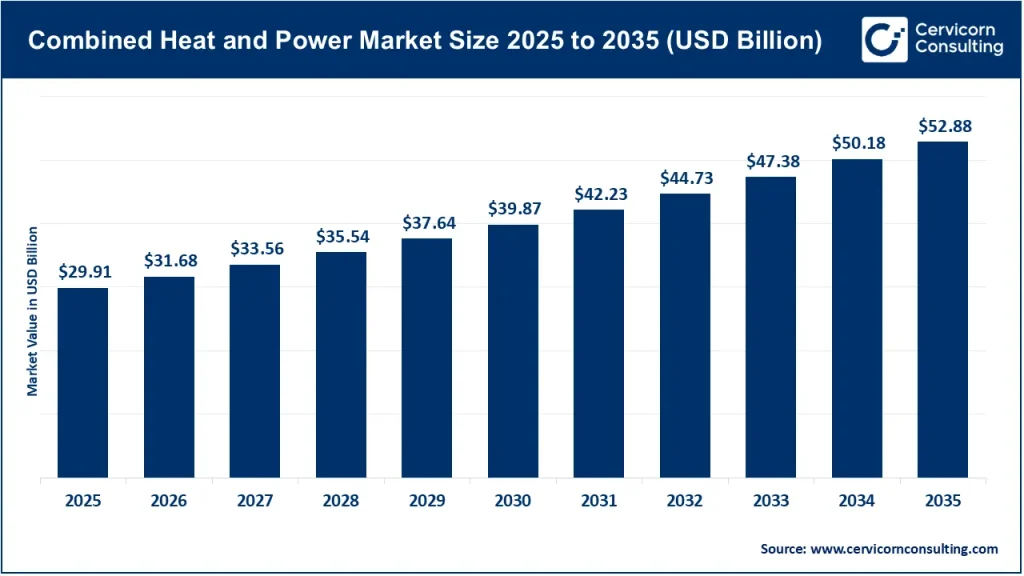
The global combined heat and power market was valued at approximately $29.91 billion in 2025 and is projected to reach $52.88 billion by 2035, expanding at a CAGR of 5.86%. This growth reflects continued interest in efficient energy generation, industrial energy security and alternative fuel options. However, investment decisions still require facility-level economic analysis rather than relying on market growth alone.
1. Is CHP More Economical Than Purchasing Electricity and Generating Heat Separately?
The first decision is whether generating electricity and recovering useful heat on-site offers a lower total cost than purchasing grid electricity and producing heat through separate boilers or heating systems.
CHP can improve overall energy efficiency because it captures heat that would otherwise be lost during conventional electricity generation. Yet the actual savings depend on local electricity tariffs, fuel prices, maintenance expenses and the proportion of recovered heat that a facility can use.
Before approving an investment, businesses should evaluate:
- Electricity costs: Compare grid tariffs, demand charges and time-of-use pricing with the cost of generating electricity on-site.
- Fuel expenses: Assess natural gas, biogas, biomass or other suitable fuel options, including transportation and supply costs.
- Heat utilization: Determine whether recovered heat can consistently support steam generation, hot water, drying, cooling or other industrial processes.
- Operating expenses: Include scheduled maintenance, engine or turbine overhauls, spare parts, staffing and auxiliary electricity consumption.
A facility with high electricity prices and continuous thermal demand may have a stronger business case than one with inexpensive grid power or limited heat consumption.
The investment model should also test scenarios involving higher fuel prices, lower electricity tariffs and reduced production volumes. This helps management understand whether projected savings remain attractive when operating conditions change.
Get a Free Sample: https://www.cervicornconsulting.com/sample/2796
2. Which CHP Technology Fits the Facility’s Energy Requirements?
Technology selection should follow the facility’s electricity and heat demand profile, rather than the rated capacity of the equipment alone. An oversized system may operate inefficiently or produce surplus electricity and heat that cannot be used economically.
Different technologies serve different operating requirements:
- Gas turbine CHP: Often suited to large industrial facilities with substantial, relatively continuous electricity and heat requirements.
- Reciprocating engine CHP: Can suit industrial and commercial applications requiring flexible operation, including facilities with changing electricity demand.
- Steam turbine CHP: Particularly relevant where industrial processes already generate steam or require substantial quantities of process steam.
- Fuel cell CHP: Worth evaluating where high electrical efficiency, low local emissions and suitable fuel infrastructure are important, subject to capital cost and fuel availability.
- Microturbine CHP: Can be considered for smaller distributed energy applications where the demand profile and economics support the technology.
The decision should account for both electrical and thermal efficiency. A system that produces substantial electricity but generates heat at unsuitable temperatures may not meet a plant’s process requirements.
Businesses should therefore compare technologies using expected annual energy output, part-load performance, maintenance intervals, equipment lifespan, installation costs and integration requirements. These factors provide a more useful basis for procurement than headline efficiency figures alone.
3. Can the Facility Maintain High Utilization Throughout the Year?
CHP economics are strongly influenced by how consistently the system operates. A plant designed for continuous operation may struggle to recover its capital cost if the host facility experiences seasonal demand, frequent shutdowns or irregular production schedules.
This makes demand forecasting a critical part of investment planning.
Management should examine:
- Historical electricity consumption and peak demand.
- Hourly or seasonal requirements for process heat and steam.
- Planned maintenance shutdowns and production expansion.
- The availability of grid electricity during CHP maintenance.
- Opportunities to use surplus electricity or thermal energy.
For example, a food-processing facility may need electricity throughout production while requiring heat for cleaning, cooking or drying. If both demands occur simultaneously, CHP can serve multiple energy needs. If thermal demand falls sharply outside the production season, the same installation may deliver weaker returns.
A practical investment rule is to size the system around dependable energy demand, not the facility’s maximum theoretical requirement. Where demand varies substantially, modular equipment or a smaller CHP installation supplemented by the grid may provide a more balanced solution.
4. How Should Businesses Evaluate Fuel Risk and Future Emissions Requirements?
Fuel selection can influence both the financial performance and long-term viability of a CHP installation. Natural gas remains an important fuel for many systems because of its availability and operational flexibility, while biogas, biomass and other lower-carbon options may be relevant where dependable supplies and suitable equipment are available.
However, a fuel that appears attractive from an emissions perspective may introduce additional procurement, storage, processing or maintenance costs.
Businesses should evaluate three dimensions before selecting a fuel strategy.
Supply security: Can the facility obtain sufficient fuel throughout the year at predictable prices? Are multiple suppliers available, and can the plant continue operating if deliveries are interrupted?
Emissions exposure: How could local air-quality rules, carbon pricing, reporting requirements or corporate decarbonization targets affect future operating costs? Natural gas can reduce direct combustion emissions relative to coal in many applications, but it is not a zero-carbon solution.
Fuel flexibility: Can the proposed equipment accommodate future changes in fuel composition or lower-carbon fuels? Hydrogen-ready equipment, for example, should be assessed against the manufacturer’s actual fuel specifications, conversion requirements, efficiency implications and infrastructure availability.
Renewable fuels can also have sustainability and lifecycle-emissions considerations. Their environmental value depends on feedstock sourcing, processing, transport and the emissions accounting method applied.
The strongest investment case considers current fuel economics alongside credible transition scenarios. Businesses should avoid paying a premium for future fuel flexibility unless the technical capability, fuel supply and potential financial benefits are sufficiently established.
5. What Is the Real Payback Period After Installation and Maintenance Costs?
An attractive projected payback period can become misleading if the financial model excludes integration costs, planned overhauls or operational risks.
A complete CHP investment assessment should include equipment procurement, engineering, civil works, electrical connections, heat-recovery systems, emissions controls, commissioning and any required upgrades to existing infrastructure.
It should then compare these costs with annual benefits, including avoided electricity purchases, reduced boiler fuel consumption and any dependable revenue from exported electricity.
A simplified annual savings calculation is:
Annual net benefit = avoided electricity and heating costs + eligible export revenue − fuel costs − operating and maintenance costs − other incremental expenses.
Simple payback can then be estimated by dividing the initial investment by the annual net benefit. However, this metric does not capture the time value of money, changes in future energy prices or major replacement expenses.
For capital-intensive projects, businesses should also assess net present value (NPV), internal rate of return (IRR) and discounted payback under multiple scenarios.
A useful sensitivity analysis compares:
- Base-case electricity and fuel prices.
- Higher fuel costs and lower grid electricity prices.
- Reduced annual operating hours.
- Higher-than-expected maintenance costs.
- Carbon-related costs and potential fuel transitions.
- Delays in installation or commissioning.
These scenarios help management determine whether CHP remains financially viable under less favorable conditions and whether the investment competes effectively with alternatives such as grid procurement, solar power, battery storage, heat pumps or waste-heat recovery.
Where Are the Strongest Opportunities for CHP Adoption?
The commercial case for CHP varies by industry because each facility has a different combination of electricity demand, thermal requirements and operating schedules.
Manufacturing and chemicals: Continuous production and substantial process-heat requirements can support high utilization, particularly where electricity and steam are required simultaneously.
Food and beverage processing: Cooking, pasteurization, drying, cleaning and refrigeration create opportunities to integrate electricity generation with useful heat or cooling, depending on system design.
Hospitals and institutional facilities: Hospitals, universities and large campuses may benefit from dependable electricity and thermal energy, although backup-power requirements and local reliability standards must be evaluated separately.
Commercial buildings: Hotels, large office complexes and other facilities with stable year-round heating, hot-water or cooling demand may be suitable candidates. Seasonal occupancy and changing building loads can affect project returns.
Waste and biogas facilities: Facilities with reliable biogas production can assess CHP as a way to convert an existing fuel stream into electricity and useful heat. Feedstock availability, gas quality and maintenance requirements are essential considerations.
For each application, the best opportunity is determined by the relationship between energy demand, local tariffs, fuel availability and equipment utilization—not simply by the size of the facility.
What Should Decision-Makers Assess Before Approving a CHP Project?
Before committing capital, energy managers, finance teams and plant operators should align on a common evaluation framework.
- Energy-demand analysis: Establish the facility’s hourly electricity and thermal demand and identify how much recovered heat can be used.
- Technology and capacity selection: Compare suitable systems based on efficiency, flexibility, operating requirements and integration complexity.
- Commercial feasibility: Model capital expenditure, operating costs, energy savings, NPV, IRR and payback under realistic scenarios.
- Operational resilience: Evaluate maintenance arrangements, spare-parts availability, grid interaction and backup requirements.
- Fuel and regulatory planning: Assess supply security, emissions obligations and the feasibility of future fuel changes.
- Alternative investment comparison: Compare CHP with other energy-efficiency, electrification, renewable-energy and storage options on a consistent financial basis.
This process helps businesses distinguish between projects that appear efficient on paper and those that can deliver measurable operational and financial value.
Conclusion
Combined heat and power can offer a practical route to lower energy waste, improve on-site energy reliability and manage electricity and heating expenses. However, its commercial viability depends on more than the technology’s rated efficiency or the projected growth of the CHP industry.
The most important factors are consistent demand for both electricity and useful heat, competitive fuel economics, appropriate system sizing, manageable maintenance costs and a credible long-term emissions strategy.
As companies evaluate energy infrastructure investments, the priority should be to understand how CHP performs under their actual operating conditions—and whether it offers a better risk-adjusted return than competing energy solutions.
To Get Detailed Overview, Contact Us: https://www.cervicornconsulting.com/contact-us