


Pharmacy Management System Market: How Can Companies Improve Inventory Control, Medication Safety and Pharmacy Profitability?
Pharmacy management systems are becoming an important part of healthcare operations as pharmacies face increasing prescription volumes, inventory complexity, regulatory requirements, and pressure to improve operating margins. For software providers, pharmacy chains, hospital administrators, and healthcare technology companies, the key decision is no longer simply whether to digitize pharmacy operations, but which capabilities can deliver measurable business value.
Market Growth Creates Opportunities for Software Providers
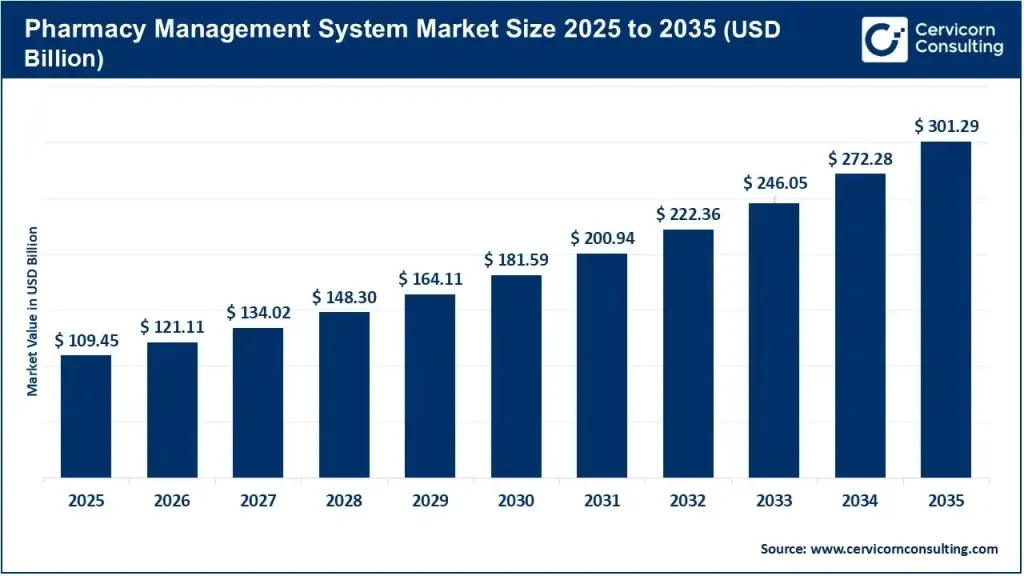
The global pharmacy management system market is projected to expand as pharmacies invest in digital dispensing, inventory automation, billing integration, and data-driven workflows. Research estimates differ considerably depending on market definitions and the software, hardware, and services included. The pharmacy management system market size was USD 109.45 billion in 2025, reaching USD 301.29 billion by 2035, while other publishers report substantially different valuations. These figures should therefore be assessed against consistent market boundaries before being used in investment decisions.
For technology companies, this growth creates opportunities across cloud-based platforms, prescription processing, inventory optimization, clinical decision support, and pharmacy analytics. However, commercial success will depend on addressing specific operational problems rather than offering an extensive feature list without clear financial benefits.
Inventory Management Is a Direct Profitability Lever
Poor inventory visibility can lead to stockouts, excess working capital, expiry-related losses, and emergency purchasing. These challenges become more complex for multi-branch pharmacies and hospitals managing medicines with different demand patterns, storage requirements, and replenishment cycles.
Pharmacy operators should evaluate systems based on their ability to track stock in real time, monitor batch numbers and expiry dates, automate reorder alerts, and identify slow-moving products. Integration with wholesalers and purchasing platforms can further improve procurement planning.
For software vendors, inventory forecasting and automated replenishment offer opportunities to differentiate their products. However, purchasing decisions should be based on measurable indicators such as inventory turnover, stockout frequency, expiry losses, order fulfilment rates, and working capital tied up in stock.
Get a Free Sample: https://www.cervicornconsulting.com/sample/3058
Cloud Deployment and Integration Influence Technology Investment
Cloud-based pharmacy platforms can reduce the need for extensive local IT infrastructure and simplify software updates across multiple locations. They can also support centralized reporting for pharmacy chains and healthcare networks. Nevertheless, cloud adoption is not automatically the best option for every organization.
Hospitals and large pharmacy operators must consider system availability, data security, integration with electronic health records, and the consequences of service interruptions. Organizations with legacy systems may also face migration costs, staff training requirements, and workflow disruptions.
Before selecting a platform, decision-makers should compare the total cost of ownership over several years, including subscription fees, implementation, data migration, customization, support, cybersecurity, and future upgrades. Vendors offering reliable integration, clear service-level commitments, and flexible deployment options may be better positioned to serve organizations with complex requirements.
Medication Safety and Regulatory Compliance Remain Essential
Pharmacy management software can support medication safety through prescription validation, drug-interaction alerts, allergy checks, barcode verification, and controlled-medicine recordkeeping. These capabilities are particularly relevant to hospital pharmacies and businesses handling high prescription volumes.
However, software cannot eliminate medication errors independently. The quality of clinical data, configuration of alerts, staff training, and adherence to established procedures remain important. Excessive low-value alerts can also contribute to alert fatigue, reducing the effectiveness of safety controls.
Healthcare providers should therefore assess systems using practical measures, including dispensing error rates, alert override rates, prescription processing time, audit readiness, and compliance-related incidents. Vendors should demonstrate how their products support applicable local regulations and provide traceable records of important transactions.
AI and Automation Could Change Competitive Positioning
Artificial intelligence is creating opportunities to improve demand forecasting, identify unusual purchasing patterns, support stock allocation, and automate repetitive administrative tasks. These capabilities may be particularly valuable for pharmacy chains managing large product portfolios across geographically dispersed locations.
Yet investment decisions should distinguish between established automation and emerging AI capabilities. Businesses should request evidence of forecast accuracy, workflow improvements, implementation requirements, and performance under real operating conditions.
For technology providers, developing AI-enabled functionality may strengthen competitiveness, but the commercial opportunity depends on whether customers can quantify the return. Pilot deployments with clearly defined performance indicators can help establish value before organizations commit to wider implementation.
What Should Companies Evaluate Before Investing?
Pharmacy operators and healthcare technology buyers should prioritize the following considerations:
- Independent pharmacies: Affordable pricing, easy implementation, reliable billing, and straightforward inventory controls.
- Pharmacy chains: Centralized inventory visibility, branch-level performance reporting, standardized workflows, and scalable licensing.
- Hospital pharmacies: Integration with hospital information systems, medication safety, audit trails, and support for complex dispensing workflows.
- Software vendors: Customer acquisition costs, recurring subscription revenue, integration capabilities, implementation capacity, and customer retention.
- Healthcare technology investors: Adoption rates, competitive differentiation, recurring revenue potential, regulatory exposure, and expansion opportunities across pharmacy segments.
A structured evaluation should also compare expected benefits against implementation and ongoing operating costs. Improvements in inventory turnover, dispensing productivity, reduced wastage, and lower administrative workload can help establish whether a proposed system justifies its investment.
Regional Expansion Requires a Localized Strategy
Market entry decisions should account for differences in healthcare infrastructure, pharmacy organization, purchasing power, digital adoption, and regulatory requirements. North America offers opportunities associated with established digital healthcare infrastructure, while Asia-Pacific presents potential for vendors targeting expanding healthcare services and pharmacy digitization.
However, regional growth alone does not establish commercial attractiveness. Companies should assess the number and type of addressable customers, local competitors, pricing expectations, integration requirements, and distribution partnerships before allocating resources. Localization, implementation support, and compatibility with existing healthcare systems can be as important as the underlying software features.
Outlook: Focus on Measurable Operational Outcomes
The pharmacy management system market is evolving from basic billing and stock-recording software toward integrated platforms that support dispensing, procurement, clinical workflows, analytics, and multi-location operations. This transition creates opportunities for technology providers, but it also raises customer expectations around interoperability, reliability, cybersecurity, and measurable returns.
For pharmacy operators, the strongest investment case will come from solving specific operational bottlenecks and tracking results after implementation. For vendors and investors, the priority should be identifying customer segments with clear unmet needs, sustainable purchasing budgets, and requirements that align with the product’s capabilities.
To Get Detailed Overview, Contact Us: https://www.cervicornconsulting.com/contact-us
Read Report: India AI Data Center Market: Where Should Businesses Prioritise Investment as AI Infrastructure Expands?