


Inulin Market: How Food and Nutrition Companies Can Balance Cost, Formulation Performance and Consumer Demand
The growing demand for gut-health products is changing how food, beverage and nutraceutical companies evaluate functional ingredients. Inulin is increasingly being considered not only as a source of prebiotic fiber, but also as an ingredient that can support sugar and fat reduction, texture improvement and product reformulation.
For companies, however, the opportunity is not simply about adding another functional ingredient to a product. The more important question is whether inulin can deliver the required nutritional and sensory benefits at a commercially viable cost.
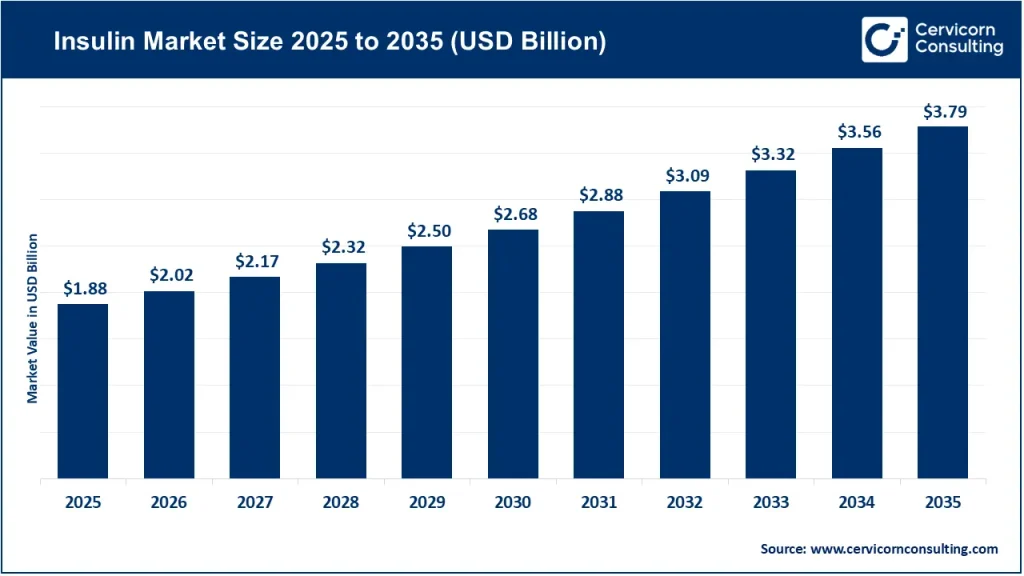
The global inulin market was valued at USD 1.88 billion in 2025 and is projected to reach approximately USD 3.79 billion by 2035, expanding at a CAGR of 7.26% from 2026 to 2035.
Where inulin is becoming commercially relevant
Inulin is being incorporated into a growing range of food and nutrition products because it can serve several formulation functions simultaneously. It can act as a prebiotic fiber while also supporting sugar and fat reduction, texture modification and product bulking.
This creates opportunities across bakery, dairy, beverages, confectionery, functional foods and nutraceuticals. But it also makes formulation decisions more complex because the appropriate inulin type, concentration and processing method can differ substantially between applications.
For product developers, the key consideration is therefore not simply whether inulin can be incorporated, but where it creates enough functional or nutritional value to justify its cost and formulation complexity.
Get a Free Sample: https://www.cervicornconsulting.com/sample/2782
Cost is becoming a formulation decision, not just a procurement issue
One of the biggest considerations for manufacturers is the cost of high-purity inulin.
The extraction, purification and transportation of premium grades can increase input costs, particularly when manufacturers require specific functional characteristics. This becomes more significant in price-sensitive categories where consumers may not be willing to absorb a substantial premium for a reformulated product.
Companies therefore need to evaluate inulin based on its total formulation contribution rather than its price per kilogram.
For example, if one ingredient can simultaneously provide fiber enrichment, partial sugar or fat replacement and texture enhancement, its higher unit cost may be justified. Conversely, using a premium grade where a lower-cost alternative delivers comparable performance can unnecessarily compress margins.
Product formulation can determine whether demand translates into revenue
Consumer demand for gut-health products is creating a favorable environment for prebiotic ingredients, but consumer interest alone does not guarantee successful commercialization.
Inulin can introduce formulation challenges related to taste, solubility and mouthfeel, particularly in reduced-calorie and reduced-sugar products.
This means R&D teams need to evaluate the ingredient much earlier in product development.
Companies considering an inulin-based formulation should assess:
- Required fiber or prebiotic content
- Solubility and dispersion requirements
- Taste and mouthfeel at the intended dosage
- Compatibility with probiotics and other functional ingredients
- Processing and storage conditions
- Cost per finished-product unit
- Regulatory requirements for nutritional and health-related claims
The commercial opportunity is strongest when these factors are evaluated together rather than independently.
Source selection is becoming strategically important
Source selection is another area where manufacturers need greater visibility.
According to Cervicorn’s market data, chicory root accounted for 36.2% of the market in 2024, supported by its availability, processing infrastructure and cost efficiency.
However, companies are also evaluating alternative plant sources such as agave and Jerusalem artichoke.
The choice of source can influence more than ingredient availability. It can affect supply-chain resilience, sustainability positioning, formulation characteristics and the ability to support clean-label product claims.
For multinational manufacturers, this creates a need to compare suppliers and raw-material sources across regions rather than relying on a single sourcing strategy.
Powder remains important, but format decisions depend on the application
The powder form accounted for 74.8% of the market in 2024, according to Cervicorn’s analysis. Its relatively long shelf life, ease of blending and transportation advantages make it suitable for applications across bakery, dairy, beverages and supplements.
However, the largest market segment is not necessarily the best format for every product.
Companies developing ready-to-drink beverages, supplements or specialized nutrition products may require different approaches to dispersion, stability and dosage. Product format therefore needs to be evaluated alongside the final application rather than selected purely on the basis of market share.
Regional demand is not developing uniformly
Regional differences are becoming increasingly relevant to companies planning expansion.
Europe represented 38.5% of the market in 2024, while Asia-Pacific accounted for 30.4% and North America represented 20.7%, according to Cervicorn’s estimates.
Europe’s position is supported by established ingredient-processing capabilities and strong consumer interest in clean-label and functional products. Asia-Pacific, meanwhile, represents a rapidly developing opportunity as consumer awareness of gut health increases and functional food categories expand.
For companies entering new markets, the opportunity should therefore be assessed at a country and application level rather than assuming that global demand will translate evenly across regions.
Regulatory requirements can influence market-entry timelines
Another consideration is the variation in regulatory requirements surrounding functional ingredients, labeling and health-related claims.
A product formulation that is commercially viable in one market may require changes in labeling, supporting evidence or claim strategy in another. This can affect product-development timelines and increase the cost of international expansion.
Companies should therefore integrate regulatory assessment into market-entry planning rather than treating it as a final-stage compliance exercise.
What companies should evaluate before increasing inulin usage
The expanding market does not automatically mean that every food or nutrition company should increase its use of inulin.
A more practical approach is to evaluate the ingredient against five commercial questions:
1. Does it solve a meaningful formulation requirement?
The strongest applications are those where inulin provides more than a single nutritional benefit.
2. Can the formulation absorb the ingredient cost?
Premium grades need to generate measurable product or consumer value to support their economics.
3. Can sensory performance be maintained?
Fiber enrichment and sugar reduction should not compromise taste, texture or consumer acceptance.
4. Is the supply chain sufficiently resilient?
Companies should compare sources, suppliers and geographic dependencies before scaling production.
5. Can the product proposition be supported in the target market?
Regulatory requirements, labeling rules and consumer expectations can vary considerably between regions.
The next phase of the inulin market will be driven by formulation economics
The growth of gut-health and functional-food categories provides a favorable demand environment for inulin. But the next stage of market development is likely to depend less on simply increasing ingredient adoption and more on improving formulation efficiency and demonstrating measurable product value.
Cervicorn’s market estimates point to continued expansion from USD 1.88 billion in 2025 to USD 3.79 billion by 2035. For ingredient manufacturers, food companies and nutraceutical developers, the strategic opportunity lies in identifying which applications, sources, formats and regions can convert this broader demand into sustainable commercial growth.
That requires looking beyond overall market size and assessing application-level demand, competitive positioning, regional dynamics, sourcing, pricing and formulation requirements together.
To Get Detailed Overview, Contact Us: https://www.cervicornconsulting.com/contact-us
Read Report: Which water-based battery technologies could shape the next phase of energy storage?