


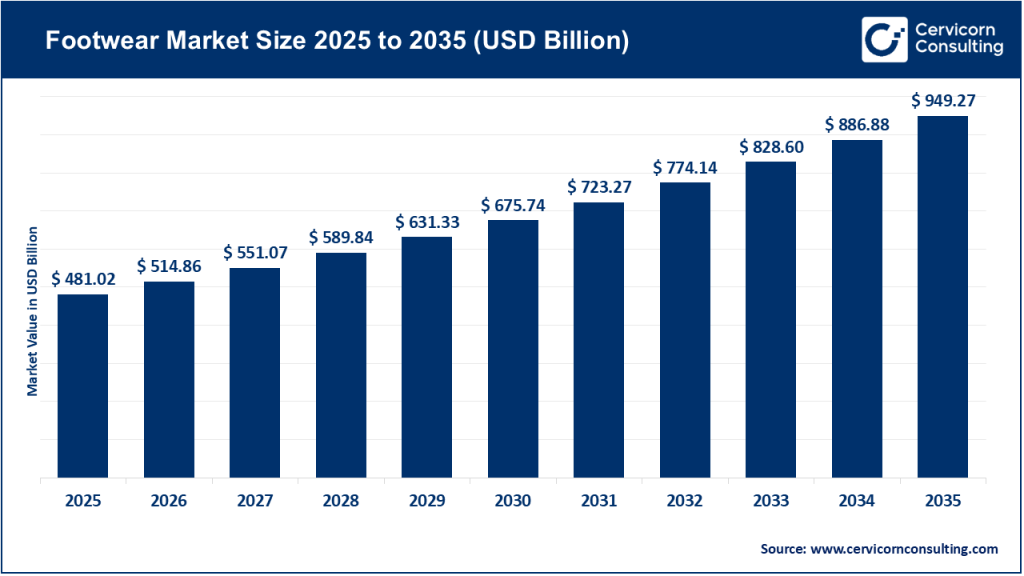
Footwear Market Size
The global footwear market size was worth USD 481.02 billion in 2025 and is anticipated to expand to around USD 949.27 billion by 2035, registering a compound annual growth rate (CAGR) of 7.1% from 2026 to 2035.
What Is the Footwear Market?
The footwear market refers to the global industry that encompasses the design, manufacturing, distribution, and retailing of footwear products — including casual, athletic/sport, formal, and other types. It serves multiple end-user segments: men, women, and kids, and spans a diverse set of distribution channels such as supermarkets/hypermarkets, specialty stores, and e-commerce platforms.
Market Trends
The footwear sector is rapidly evolving with several notable trends:
1. Athleisure & Comfort-Driven Demand
Athleisure continues to blur lines between sports performance and everyday wear, pushing innovation in cushioning, flexibility, and comfort. Consumers increasingly favour footwear that works for both fitness and casual use.
2. Sustainability & Eco-Conscious Products
Sustainability has moved from niche to essential. Brands are adopting recyclable textiles, bio-based foams, and eco-friendly materials — driven by both consumer demand and regulatory pressure.
3. Technology & Smart Footwear
Digital integration and smart technologies are reshaping footwear with options like embedded sensors, biometric tracking, and real-time performance insights. This creates high-margin opportunities and blends footwear with wearable tech.
4. Direct-to-Consumer (DTC) Expansion
Digital-first retail models allow brands to capture consumer data, personalize offerings, and improve profit margins — reshaping traditional retail footprints.
Get a Free Sample: https://www.cervicornconsulting.com/sample/2899
Market Dynamics
The footwear market’s performance is shaped by a balance of drivers, challenges, and opportunities.
Key Market Drivers
-
Active Lifestyle Adoption: Growing awareness of fitness and health fuels demand for specialized athletic footwear.
-
Sustainability Focus: Younger consumers increasingly prefer environmentally sound products, prompting manufacturers to innovate.
Market Restraints
-
Raw Material Price Fluctuations: Volatile pricing for rubber, leather, and synthetic materials impacts production costs.
-
Regulatory Compliance: Stricter environmental standards, especially in developed markets, increase compliance costs.
Market Opportunities
-
Smart Tech Integration: Embedding sensor tech and performance analytics into footwear opens new premium segments.
-
Collaborations & Brand Partnerships: Strategic alliances with sports, entertainment, and fashion sectors enhance visibility and appeal.
Market Challenges
-
Fast-Changing Fashion Cycles: Social media trends shorten product lifecycles, pressuring manufacturers for quicker turn-arounds.
-
Ethical Sourcing Risks: Complex global supply chains make ethical labor and human rights compliance essential and challenging.
Regional Analysis
Understanding which regions lead or grow faster helps contextualize global demand:
Asia-Pacific: Largest Market
-
Dominates with the highest share (~35% in 2025).
-
Fueled by rising disposable incomes, urbanization, and strong demand for sports and affordable casual footwear.
North America: Fastest Growing
-
Rapid digital transformation and omnichannel retail strategies are driving growth.
-
Strong online presence and DTC models enhance consumer engagement.
Europe
-
Growth is driven by sustainability policies and eco-conscious consumers.
-
Regulatory frameworks, such as product transparency standards, shape market evolution.
LAMEA (Latin America & Middle East & Africa)
-
Presents long-term potential with rising urbanization and organized retail outlets expanding consumer reach.
Recent Developments Shaping the Footwear Market
Significant milestones reflect product innovation and strategic moves by major brands:
Product Launches & Partnerships
-
Adidas AG launched the Predator 25 football boot — focusing on enhanced grip and advanced materials (Jan 2025).
-
Nike partnered with SKIMS to introduce NikeSKIMS — a women-focused activewear and footwear line (Feb 2025).
-
Nike also unveiled the Air Max Dn8 sneaker with improved cushioning and design (Mar 2025).
These developments highlight ongoing competition between legacy brands and emerging market niches — emphasizing innovation, inclusivity, and performance.
Conclusion
The global footwear market is at an exciting intersection of style, function, and technology. With strong projected growth, increasing sustainability focus, and emerging digital innovation, the industry continues to evolve rapidly. As consumer preferences shift toward comfort, performance, and eco-consciousness, market players who adapt with agility are likely to lead in the coming decade.
To Get Detailed Overview, Contact Us: https://www.cervicornconsulting.com/contact-us
Read Report: India Data Center Cooling Market Revenue, Trends, and Strategic Insights by 2035