


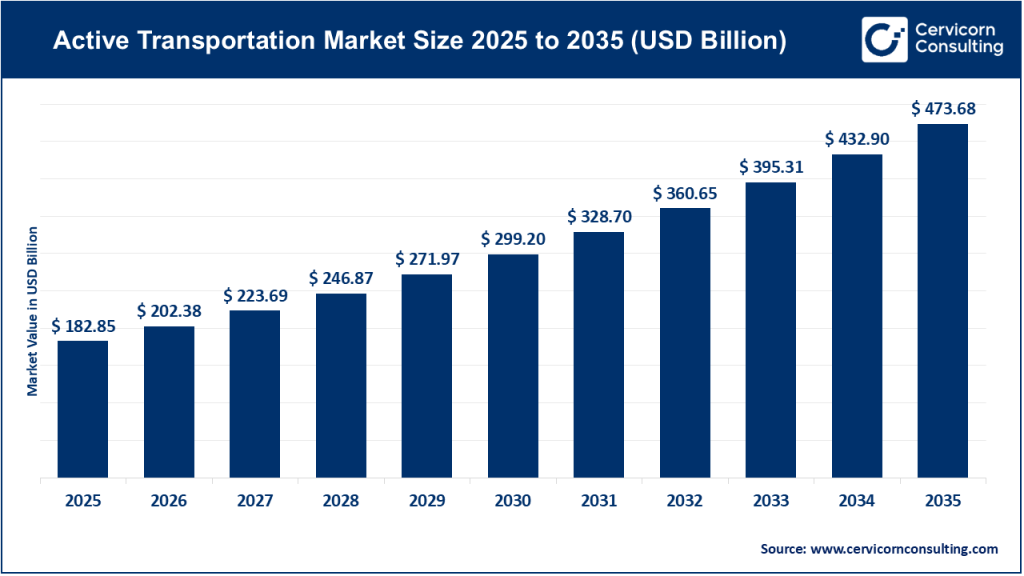
Active Transportation Market Size
The global active transportation market size was worth USD 182.85 billion in 2025 and is anticipated to expand to around USD 473.68 billion by 2035, registering a compound annual growth rate (CAGR) of 9.9% from 2026 to 2035.
This expanding ecosystem is driving innovation in electric bicycles, shared mobility platforms, digital route planning, and city infrastructure planning. As urban populations continue to rise, the demand for sustainable and accessible mobility solutions will likely keep active transportation as a central pillar of future transportation systems.
What is the Active Transportation Market?
Active transportation refers to forms of travel that involve human physical activity such as walking, cycling, skateboarding, or the use of non-motorized or micro-mobility vehicles like bicycles and electric bikes. The active transportation market includes the ecosystem of infrastructure, vehicles, technologies, services, and policy frameworks that support these mobility methods. It covers bicycles, e-bikes, shared mobility systems, cycling infrastructure, pedestrian pathways, and integrated urban mobility solutions designed to reduce reliance on fossil-fuel transportation.
The market has expanded significantly as governments, urban planners, and mobility companies prioritize sustainable transport solutions to address congestion, climate change, and public health challenges. Cities worldwide are investing in cycling lanes, pedestrian-friendly infrastructure, bike-sharing systems, and electric micro-mobility solutions. The shift toward urban sustainability and clean mobility is transforming how people move in cities and is placing active transportation at the center of future mobility strategies.
Active transportation is also increasingly integrated into smart mobility and sustainable transportation ecosystems. These systems combine public transit, cycling infrastructure, and digital mobility platforms to create efficient and low-emission urban transport networks.
Active Transportation Market Growth Factors
The growth of the active transportation market is driven by several interconnected factors including rising urbanization, increasing awareness of environmental sustainability, and growing health consciousness among individuals worldwide. Governments and city planners are prioritizing low-carbon transportation options to reduce greenhouse gas emissions and urban congestion, which has resulted in substantial investments in cycling infrastructure, pedestrian networks, and micro-mobility systems. Technological advancements such as electric bicycles, connected mobility platforms, and GPS-enabled bike sharing systems are making active transportation more convenient and accessible to urban populations.
In addition, rising fuel costs and growing traffic congestion are encouraging commuters to adopt alternative transport methods like cycling and walking for short-distance travel. Public health campaigns promoting physical activity and healthy lifestyles are further supporting the adoption of active mobility solutions. Urban mobility initiatives that integrate active transportation with public transit networks are also expanding the market, as cities seek to create efficient multimodal transport systems. Furthermore, the rise of smart city initiatives and sustainable mobility policies across North America, Europe, and Asia-Pacific is accelerating infrastructure development and encouraging private investments in active mobility solutions.
Get a Free Sample: https://www.cervicornconsulting.com/sample/2908
Why Active Transportation is Important
Active transportation plays a critical role in creating sustainable, livable, and efficient cities. One of the most significant benefits is its ability to reduce carbon emissions. Transportation is one of the largest contributors to global greenhouse gas emissions, and shifting even a small percentage of trips from cars to bicycles or walking can significantly lower urban pollution levels.
Another major advantage is improved public health. Regular physical activity through walking or cycling reduces the risk of chronic diseases such as obesity, diabetes, and cardiovascular conditions. Active transportation integrates physical activity into daily routines, making it easier for individuals to maintain healthier lifestyles without requiring additional time for exercise.
From an economic perspective, active transportation reduces infrastructure costs compared to car-centric transport systems. Building and maintaining bicycle lanes and pedestrian pathways is far less expensive than constructing highways and large parking facilities. Cities that promote cycling and walking also experience increased local economic activity because people traveling by foot or bike tend to interact more with local businesses.
Active transportation also contributes to improved urban livability. Reduced traffic congestion, quieter streets, cleaner air, and safer communities make cities more attractive places to live and work. As cities aim to become more sustainable and resilient, active mobility solutions are becoming an essential part of urban planning strategies.
Key Companies in the Active Transportation Market
| Company | Specialization | Key Focus Areas | Notable Features | 2024 Revenue | Market Share | Global Presence |
|---|---|---|---|---|---|---|
| Trek Bicycle Corporation | Bicycle and e-bike manufacturing | High-performance bicycles, electric bikes, cycling gear | Strong brand recognition and global dealer network | ~USD 2 Billion | ~10% | North America, Europe, Asia |
| Giant Manufacturing Co | Global bicycle manufacturing | Road bikes, mountain bikes, e-bikes, cycling components | One of the world’s largest bicycle manufacturers | ~USD 2.5 Billion | ~12% | Asia, Europe, North America |
| Specialized Bicycle Components | Premium bicycle technology | Performance bikes, e-bikes, cycling innovation | Advanced R&D and professional cycling partnerships | ~USD 1.5 Billion | ~8% | Global distribution network |
| Accell Group NV | European bicycle group | Electric bicycles, urban mobility solutions | Strong presence in e-bike segment | ~USD 1.4 Billion | ~7% | Europe, North America |
| Pedego Electric Bikes | Electric bicycle solutions | Urban commuting e-bikes, recreational e-bikes | Focus on electric mobility and franchise retail network | ~USD 120 Million | ~2% | North America, expanding globally |
These companies are investing heavily in research and development, electric mobility technologies, and sustainable manufacturing processes to maintain competitive advantages in the evolving active transportation ecosystem.
Leading Trends in the Active Transportation Market and Their Impact
1. Growth of Electric Bicycles and Micro-Mobility
Electric bicycles (e-bikes) are among the fastest-growing segments of the active transportation market. They provide an efficient alternative for longer urban commutes and allow users to travel greater distances without excessive physical effort. The adoption of e-bikes is expanding across both developed and emerging economies, particularly in cities where governments are promoting low-emission transportation.
2. Integration with Smart Mobility Platforms
Digital mobility platforms that integrate bike sharing, public transit, and ride-sharing services are transforming urban transportation systems. Smartphone apps now allow commuters to plan routes that combine walking, cycling, and public transit seamlessly.
3. Expansion of Bike-Sharing Programs
Bike-sharing programs have expanded rapidly in major cities. These programs allow users to rent bicycles or e-bikes for short trips, reducing reliance on private vehicles. Dockless bike-sharing systems and app-based rental platforms have significantly increased accessibility.
4. Smart Infrastructure Development
Cities are increasingly developing smart cycling infrastructure, including protected bike lanes, smart traffic signals for cyclists, and connected urban mobility systems. These improvements enhance safety and encourage more individuals to choose active transportation.
5. Corporate and Institutional Adoption
Many organizations are encouraging employees to commute by bicycle through incentive programs, bike parking facilities, and partnerships with mobility providers. Corporate sustainability goals are driving adoption of greener commuting methods.
The impact of these trends is substantial, leading to increased demand for bicycles, improved urban infrastructure, and greater public acceptance of alternative mobility solutions.
Successful Examples of Active Transportation Around the World
Copenhagen, Denmark
Copenhagen is widely regarded as one of the most bicycle-friendly cities in the world. Nearly half of all daily commutes in the city are made by bicycle. The city has invested heavily in protected bike lanes, bicycle highways, and integrated cycling infrastructure that connects residential areas to workplaces and public transit hubs.
Amsterdam, Netherlands
Amsterdam has developed an extensive network of cycling infrastructure that supports millions of daily bicycle trips. Dedicated bike lanes, secure parking facilities, and traffic systems designed for cyclists make cycling the preferred mode of transportation for many residents.
Bogotá, Colombia
Bogotá’s “Ciclovía” program temporarily closes major roads to motor vehicles on weekends and holidays, allowing millions of residents to walk, cycle, and exercise safely. The city has also invested in hundreds of kilometers of cycling lanes, making it one of the most bike-friendly cities in Latin America.
Paris, France
Paris has rapidly expanded cycling infrastructure in recent years, including the development of protected bike lanes and bike-sharing programs. The city’s policies aim to significantly reduce car traffic and promote cycling as a primary transportation mode.
Portland, United States
Portland is a leader in active transportation in North America. The city has implemented extensive cycling infrastructure, bike-sharing systems, and policies that encourage residents to choose sustainable transportation options.
These examples demonstrate how strong policies, infrastructure investment, and public engagement can transform urban mobility and encourage widespread adoption of active transportation.
Global Regional Analysis Including Government Initiatives and Policies
North America
North America has seen significant growth in active transportation due to increasing environmental awareness and urban mobility challenges. Cities such as New York, Portland, and Vancouver have invested heavily in bicycle infrastructure and pedestrian-friendly urban design.
Government initiatives are supporting the transition toward sustainable transportation. In the United States, federal funding programs have allocated billions of dollars to public transit and sustainable mobility projects aimed at improving urban transportation systems and reducing congestion.
Canada has also introduced policies promoting cycling infrastructure, including investments in urban bike networks and green transportation initiatives.
Europe
Europe is the global leader in active transportation adoption. Countries such as the Netherlands, Denmark, and Germany have long-standing policies supporting cycling and pedestrian mobility.
European governments have implemented policies such as:
- National cycling strategies
- Subsidies for e-bikes
- Low-emission urban zones
- Large-scale cycling infrastructure investments
The European Union’s Green Deal also emphasizes sustainable mobility solutions, encouraging member states to invest in zero-emission transportation infrastructure and urban mobility planning.
Asia-Pacific
Asia-Pacific is emerging as one of the fastest-growing regions for active transportation. Rapid urbanization, population growth, and government initiatives promoting sustainable mobility are driving market expansion.
China and Japan have invested heavily in electric bicycle manufacturing and urban cycling infrastructure. China is currently one of the largest markets for electric bicycles in the world.
India is also promoting sustainable transportation through initiatives that encourage cycling infrastructure, smart mobility solutions, and integrated public transport systems.
Latin America
Cities in Latin America are increasingly adopting active transportation policies to address traffic congestion and pollution. Bogotá’s cycling infrastructure and Ciclovía program have become global models for promoting active mobility.
Other cities such as Mexico City and Santiago are expanding bike-sharing programs and cycling infrastructure to support sustainable urban transportation.
Middle East and Africa
Active transportation adoption is gradually increasing in the Middle East and Africa. Governments are investing in smart city initiatives and sustainable urban planning projects that incorporate cycling and pedestrian mobility.
Countries such as the United Arab Emirates and South Africa are developing cycling infrastructure and promoting sustainable mobility strategies as part of broader urban development plans.
To Get Detailed Overview, Contact Us: https://www.cervicornconsulting.com/contact-us
Read Report: Supercapacitors Market Growth Drivers, Trends, Key Players and Regional Insights by 2035